



The Endemic Galapagos Cruise Tour
The Endemic Galapagos Cruise is a luxurious modern catamaran designed to offer you a fantastic experience of the Galapagos Islands.
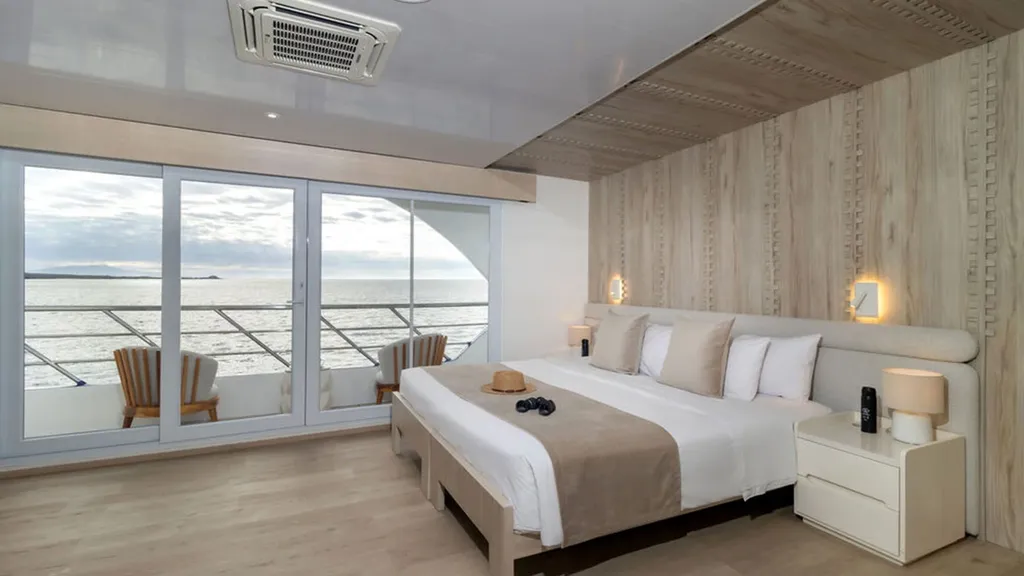
The luxury yacht offers spacious cabins with private balconies, comfortable social areas and delicious cuisine. From the vessel, you will enjoy exciting activities led by skilled naturalist guides.
Offering more stability and comfort than single-hulled yachts, the craftsmanship of the Endemic surpasses most Galapagos cruises to provide a fantastic island-hopping experience.
The Endemic Galapagos Cruise Accommodation
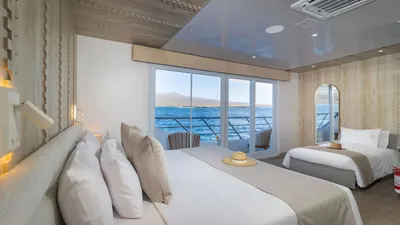
Each cabin offers air-conditioning, a private balcony, a spacious and impeccably appointed bathroom, and the choice between a king-size bed or two twin-size beds.
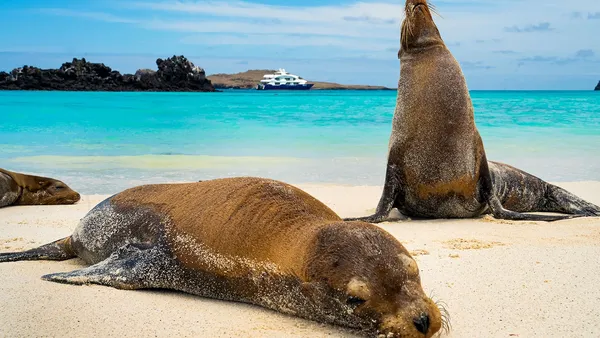
From the comfortable Endemic, you will head out on guided tours of the Galapagos Islands. Your skilled guide will help you find the giant tortoises, frigate birds, playful sea lions and iconic marine iguanas.
The Endemic also offers:
- Panoramic Suites & Transverse Stability
- Wall-to-Wall Sliding Glass Doors
- Outdoor Balcony & Spacious Exterior Areas
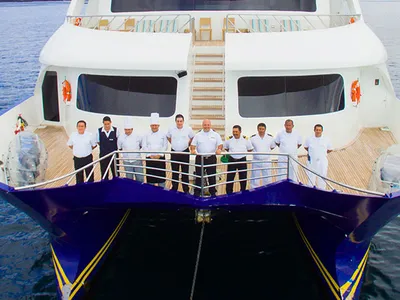
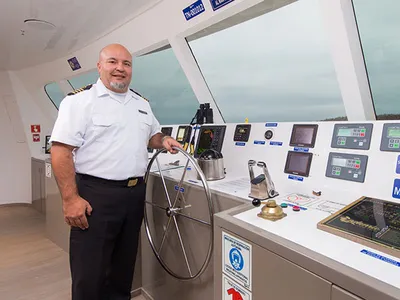
- Top Naturalist Guides and Crew
- Kayaks and Snorkeling Gear
- Al Fresco Dining and BBQ Areas
- Open Sky Lounge & Outdoor Whirlpool
- Sun Terrace and Observation Platform
- Great Itineraries and Visitor Points
- Cruise Service Officer (Hotel Manager)
- Spacious, Modern and Elegant Golden & Single Cabins
- Long and Short Itineraries Available
The Endemic Galapagos Cruise Tour Summary
Aboard the Endemic Cruise, you will explore isolated islands, wildlife havens, and breathtaking landscapes with the following itineraries. Choose from short or long Galapagos expedition packages.
On each cruise, expert Galapagos National Park guides lead daily excursions to help you make the most of your experience of these remarkable islands. Choose from 3, 4, 5 and 7 night cruises.
Video Introduction

Tour Info
- Country: Ecuador
- Focus Area: Galapagos National Park
- Duration: 4, 5, 6, 8+ days
- Start Point: Baltra Airport (GPS)
- End Point: Baltra Airport (GPS)
The Endemic Galapagos Cruise Itinerary
Choose your itinerary
Click a duration to see the day-by-day programme for this cruise.
Other itinerary lengths may be available — send a request to check options and pricing.
Day 1 · Thursday
Baltra Arrival & Bartholomew Island
You'll land at Baltra Island Airport, where the crew meets you and takes you straight to the boat to begin your cruise. The afternoon brings your first stop at Bartholomew Island, home to Pinnacle Rock, one of the most photographed formations in the Galápagos. The beaches at its base are ideal for a first snorkel, and there's a good chance you'll be swimming alongside Galápagos penguins.
Day 2 · Friday
Devil's Crown, Cormorant Point or Post Office Bay & The Baroness' Overlook
Devil's Crown, a submerged volcanic crater off Floreana Island, is one of the best places in the Galápagos to snorkel with sharks, sea turtles and rays. From there you'll visit either Cormorant Point, a walk across green olivine sand leading to a lagoon where flamingos gather, or Post Office Bay, where you can leave a letter in the barrel that whalers once used to send mail home. The Baroness' Overlook rounds out the day with sweeping views across the Floreana coastline.
Day 3 · Saturday
Chinese Hat & North Seymour Island
Chinese Hat is named for its distinctive cone shape, a site known for its volcanic geology and one rarely visited outside a Galápagos cruise. North Seymour Island follows, home to the largest colony of magnificent frigatebirds in the Galápagos, along with blue-footed boobies performing their courtship dance.
Day 4 · Sunday
Black Turtle Cove & Departure
Black Turtle Cove is explored quietly by panga, with sharks, sea turtles, herons and the occasional school of golden rays moving through the shallows. After this last stop you'll be transferred to Baltra Airport for your flight back to mainland Ecuador.
Day 1 · Sunday
Baltra Arrival & Dragon Hill
You'll land at Baltra Island Airport, where the crew is waiting to bring you straight to the vessel. At Dragon Hill, in the northwest of Santa Cruz Island, a walk inland brings you to land iguanas, a flamingo lagoon and pintail ducks, with a chance to snorkel offshore before heading back to the yacht.
Day 2 · Monday
Kicker Rock, Witch Hill & Lobos Island
Kicker Rock is an impressive formation shaped by centuries of erosion, and the boat circles it slowly for photos as the light shifts. Witch Hill offers a dinghy ride past dramatic rock formations along the shoreline before you land on a white sand beach with some of the clearest water in the islands. In the afternoon you'll head to Lobos Island to snorkel alongside sea lions.
Day 3 · Tuesday
Gardner Bay, Osborn and Gardner Islets & Suarez Point
Gardner Bay, on Española Island, offers a white sand beach for relaxing, snorkelling or sunbathing next to sleeping sea lions, or you might spend that time at the Osborn and Gardner Islets instead, a strong spot for underwater exploration and snorkelling. Suárez Point closes out the day, a favourite among veteran Galápagos guides and the one place in the islands where you can reliably expect to see the waved albatross.
Day 4 · Wednesday
Santa Fe Island, Fausto Llerena Breeding Center & Santa Cruz Highlands
Santa Fe Island offers two trail options, both good for spotting endemic species along the way. After the walk, a swim in calm water or a snorkel alongside playful sea lions is hard to resist. At the Fausto Llerena Breeding Center you'll see tortoises of different subspecies being bred and readied for reintroduction to the wild, and up in the Santa Cruz highlands those same tortoises roam free among sinkholes and lava tunnels.
Day 5 · Thursday
South Plaza Island & Departure
South Plaza Island is a small, rocky island covered in endemic cacti and home to a healthy population of land iguanas. After this final stop you'll be transferred to Baltra Airport for your flight back to mainland Ecuador.
Day 1 · Thursday
Baltra Arrival & Bartholomew Island
You'll land at Baltra Island Airport, where the crew meets you and takes you straight to the boat to begin your cruise. The afternoon brings your first stop at Bartholomew Island, home to Pinnacle Rock, one of the most photographed formations in the Galápagos. The beaches at its base are ideal for a first snorkel, and there's a good chance you'll be swimming alongside Galápagos penguins.
Day 2 · Friday
Devil's Crown, Cormorant Point or Post Office Bay & The Baroness' Overlook
Devil's Crown, a submerged volcanic crater off Floreana Island, is one of the best places in the Galápagos to snorkel with sharks, sea turtles and rays. From there you'll visit either Cormorant Point, a walk across green olivine sand leading to a lagoon where flamingos gather, or Post Office Bay, where you can leave a letter in the barrel that whalers once used to send mail home. The Baroness' Overlook rounds out the day with sweeping views across the Floreana coastline.
Day 3 · Saturday
Chinese Hat & North Seymour Island
Chinese Hat is named for its distinctive cone shape, a site known for its volcanic geology and one rarely visited outside a Galápagos cruise. North Seymour Island follows, home to the largest colony of magnificent frigatebirds in the Galápagos, along with blue-footed boobies performing their courtship dance.
Day 4 · Sunday
Black Turtle Cove & Bachas Beach
Black Turtle Cove is explored quietly by panga, with sharks, sea turtles, herons and the occasional school of golden rays moving through the shallows. Bachas Beach follows in the afternoon, a relaxed spot for a swim or an easy snorkel just offshore.
Day 5 · Monday
Darwin Bay & Prince Philip's Steps
Darwin Bay sits within the long-eroded rim of a prehistoric volcanic crater, where great frigatebirds gather on the beach and red-footed boobies nest in the trees above. From there, a stone stairway known as Prince Philip's Steps climbs through a small patch of Scalesia forest, home to the short-eared owl.
Day 6 · Tuesday
Santa Cruz Highlands & Departure
Up in the Santa Cruz highlands, giant tortoises roam freely among sinkholes and lava tunnels carved into the landscape. After this last stop you'll be transferred to Baltra Airport for your flight back to mainland Ecuador.
Day 1 · Tuesday
Baltra Arrival & Sullivan Bay
You'll land at Baltra Island Airport, where the crew is waiting to bring you straight to the vessel. Sullivan Bay sits on the east coast of Santiago Island, where you'll land on a white coral sand beach and walk out across a field of lava that flowed less than a century ago, some of the youngest rock in the islands.
Day 2 · Wednesday
Santa Cruz Highlands & Arnaldo Tupiza Breeding Center
Up in the Santa Cruz highlands, giant tortoises roam freely among sinkholes and lava tunnels carved into the landscape. At the Arnaldo Tupiza Breeding Center on Isabela Island you'll see infant and juvenile tortoises being raised until they're ready for release into the wild.
Day 3 · Thursday
Elizabeth Bay & Urbina Bay
A zodiac ride starts with a visit to the Marielas Islets, home to the largest and most important penguin colony in the Galápagos, before continuing into a cove lined with red mangroves. Urbina Bay follows, where uplifted coral formations sit alongside land iguanas, giant tortoises and lava lizards.
Day 4 · Friday
Tagus Cove & Espinoza Point
At Tagus Cove you'll look out for the flightless cormorant and other seabirds before the trail climbs to a cliff top overlooking Darwin Lake, a saline lake saltier than the ocean itself. Espinoza Point sits within a striking lava landscape dotted with lava cactus, with mangroves growing straight out of the rock.
Day 5 · Saturday
Buccaneer Cove, Espumilla Beach & Rabida Island
Buccaneer Cove was once a stop for pirates and whalers repairing ships and loading tortoises, and today it's a peaceful spot for a zodiac ride, snorkelling or kayaking, or you might instead spend the time at Espumilla Beach, known for marine iguanas, Sally lightfoot crabs, herons and octopi along its pale sand. Rábida Island closes out the day, known for its red sand beach, framed by cactus groves and striking rock formations.
Day 6 · Sunday
Mosquera Islet & Departure
Mosquera Islet is a long sand bank stretching over 600 metres, home to one of the largest sea lion populations in the Galápagos, along with lava gulls, Sally lightfoot crabs and the occasional orca offshore. After this last stop you'll be transferred to Baltra Airport for your flight back to mainland Ecuador.
Day 1 · Sunday
Baltra Arrival & Bachas Beach
You'll land at Baltra Island Airport, where the crew meets you and takes you straight to the vessel. Bachas Beach is a relaxed spot for a swim or an easy snorkel just offshore.
Day 2 · Monday
Darwin Bay & Prince Philip's Steps
Darwin Bay sits within the long-eroded rim of a prehistoric volcanic crater, where great frigatebirds gather on the beach and red-footed boobies nest in the trees above. From there, a stone stairway known as Prince Philip's Steps climbs through a small patch of Scalesia forest, home to the short-eared owl.
Day 3 · Tuesday
Santa Cruz Highlands & Sullivan Bay
Up in the Santa Cruz highlands, giant tortoises roam freely among sinkholes and lava tunnels carved into the landscape. Sullivan Bay follows, on the east coast of Santiago Island, where you'll land on a white coral sand beach and walk out across a field of lava that flowed less than a century ago.
Day 4 · Wednesday
Tintoreras & Sierra Negra Volcano
Las Tintoreras is a chain of islets off Isabela Island, well suited to a dinghy ride, snorkelling, kayaking or paddleboarding. Sierra Negra, one of the most active volcanoes in the Galápagos, holds the second largest caldera in the world. At the Arnaldo Tupiza Breeding Center you'll see infant and juvenile tortoises being raised until they're ready for release into the wild.
Day 5 · Thursday
Elizabeth Bay & Urbina Bay
A zodiac ride starts with a visit to the Marielas Islets, home to the largest and most important penguin colony in the Galápagos, before continuing into a cove lined with red mangroves. Urbina Bay follows, where uplifted coral formations sit alongside land iguanas, giant tortoises and lava lizards.
Day 6 · Friday
Tagus Cove & Espinoza Point
At Tagus Cove you'll look out for the flightless cormorant and other seabirds before the trail climbs to a cliff top overlooking Darwin Lake, a saline lake saltier than the ocean itself. Espinoza Point sits within a striking lava landscape dotted with lava cactus, with mangroves growing straight out of the rock.
Day 7 · Saturday
Buccaneer Cove, Espumilla Beach & Rabida Island
Buccaneer Cove was once a stop for pirates and whalers repairing ships and loading tortoises, and today it's a peaceful spot for a zodiac ride, snorkelling or kayaking, or you might instead spend the time at Espumilla Beach, known for marine iguanas, Sally lightfoot crabs, herons and octopi along its pale sand. Rábida Island closes out the day, known for its red sand beach, framed by cactus groves and striking rock formations.
Day 8 · Sunday
Mosquera Islet & Departure
Mosquera Islet is a long sand bank stretching over 600 metres, home to one of the largest sea lion populations in the Galápagos, along with lava gulls, Sally lightfoot crabs and the occasional orca offshore. After this last stop you'll be transferred to Baltra Airport for your flight back to mainland Ecuador.
Day 1 · Sunday
Baltra Arrival & Dragon Hill
You'll land at Baltra Island Airport, where the crew is waiting to bring you straight to the vessel. At Dragon Hill, in the northwest of Santa Cruz Island, a walk inland brings you to land iguanas, a flamingo lagoon and pintail ducks, with a chance to snorkel offshore before heading back to the yacht.
Day 2 · Monday
Kicker Rock, Witch Hill & Lobos Island
Kicker Rock is an impressive formation shaped by centuries of erosion, and the boat circles it slowly for photos as the light shifts. Witch Hill offers a dinghy ride past dramatic rock formations along the shoreline before you land on a white sand beach with some of the clearest water in the islands. In the afternoon you'll head to Lobos Island to snorkel alongside sea lions.
Day 3 · Tuesday
Gardner Bay, Osborn and Gardner Islets & Suarez Point
Gardner Bay, on Española Island, offers a white sand beach for relaxing, snorkelling or sunbathing next to sleeping sea lions, or you might spend that time at the Osborn and Gardner Islets instead, a strong spot for underwater exploration and snorkelling. Suárez Point closes out the day, a favourite among veteran Galápagos guides and the one place in the islands where you can reliably expect to see the waved albatross.
Day 4 · Wednesday
Santa Fe Island, Fausto Llerena Breeding Center & Santa Cruz Highlands
Santa Fe Island offers two trail options, both good for spotting endemic species along the way. After the walk, a swim in calm water or a snorkel alongside playful sea lions is hard to resist. At the Fausto Llerena Breeding Center you'll see tortoises of different subspecies being bred and readied for reintroduction to the wild, and up in the Santa Cruz highlands those same tortoises roam free among sinkholes and lava tunnels.
Day 5 · Thursday
South Plaza Island & Bartholomew Island
South Plaza Island is a small, rocky island covered in endemic cacti and home to a healthy population of land iguanas. Bartholomew Island follows in the afternoon, home to Pinnacle Rock, one of the most recognisable formations in the Galápagos, with a beach at its base that's ideal for snorkelling alongside penguins.
Day 6 · Friday
Devil's Crown, Cormorant Point or Post Office Bay & The Baroness' Overlook
Devil's Crown, a submerged volcanic crater off Floreana Island, is one of the best places in the Galápagos to snorkel with sharks, sea turtles and rays. From there you'll visit either Cormorant Point, a walk across green olivine sand leading to a lagoon where flamingos gather, or Post Office Bay, where you can leave a letter in the barrel that whalers once used to send mail home. The Baroness' Overlook rounds out the day with sweeping views across the Floreana coastline.
Day 7 · Saturday
Chinese Hat & North Seymour Island
Chinese Hat is named for its distinctive cone shape, a site known for its volcanic geology and one rarely visited outside a Galápagos cruise. North Seymour Island follows, home to the largest colony of magnificent frigatebirds in the Galápagos, along with blue-footed boobies performing their courtship dance.
Day 8 · Sunday
Black Turtle Cove & Bachas Beach
Black Turtle Cove is explored quietly by panga, with sharks, sea turtles, herons and the occasional school of golden rays moving through the shallows. Bachas Beach follows in the afternoon, a relaxed spot for a swim or an easy snorkel just offshore.
Day 9 · Monday
Darwin Bay & Prince Philip's Steps
Darwin Bay sits within the long-eroded rim of a prehistoric volcanic crater, where great frigatebirds gather on the beach and red-footed boobies nest in the trees above. From there, a stone stairway known as Prince Philip's Steps climbs through a small patch of Scalesia forest, home to the short-eared owl.
Day 10 · Tuesday
Santa Cruz Highlands & Departure
Up in the Santa Cruz highlands, giant tortoises roam freely among sinkholes and lava tunnels carved into the landscape. After this last stop you'll be transferred to Baltra Airport for your flight back to mainland Ecuador.
Day 1 · Thursday
Baltra Arrival & Bartholomew Island
You'll land at Baltra Island Airport, where the crew meets you and takes you straight to the boat to begin your cruise. The afternoon brings your first stop at Bartholomew Island, home to Pinnacle Rock, one of the most photographed formations in the Galápagos. The beaches at its base are ideal for a first snorkel, and there's a good chance you'll be swimming alongside Galápagos penguins.
Day 2 · Friday
Devil's Crown, Cormorant Point or Post Office Bay & The Baroness' Overlook
Devil's Crown, a submerged volcanic crater off Floreana Island, is one of the best places in the Galápagos to snorkel with sharks, sea turtles and rays. From there you'll visit either Cormorant Point, a walk across green olivine sand leading to a lagoon where flamingos gather, or Post Office Bay, where you can leave a letter in the barrel that whalers once used to send mail home. The Baroness' Overlook rounds out the day with sweeping views across the Floreana coastline.
Day 3 · Saturday
Chinese Hat & North Seymour Island
Chinese Hat is named for its distinctive cone shape, a site known for its volcanic geology and one rarely visited outside a Galápagos cruise. North Seymour Island follows, home to the largest colony of magnificent frigatebirds in the Galápagos, along with blue-footed boobies performing their courtship dance.
Day 4 · Sunday
Black Turtle Cove & Bachas Beach
Black Turtle Cove is explored quietly by panga, with sharks, sea turtles, herons and the occasional school of golden rays moving through the shallows. Bachas Beach follows in the afternoon, a relaxed spot for a swim or an easy snorkel just offshore.
Day 5 · Monday
Darwin Bay & Prince Philip's Steps
Darwin Bay sits within the long-eroded rim of a prehistoric volcanic crater, where great frigatebirds gather on the beach and red-footed boobies nest in the trees above. From there, a stone stairway known as Prince Philip's Steps climbs through a small patch of Scalesia forest, home to the short-eared owl.
Day 6 · Tuesday
Santa Cruz Highlands & Sullivan Bay
Up in the Santa Cruz highlands, giant tortoises roam freely among sinkholes and lava tunnels carved into the landscape. Sullivan Bay follows, on the east coast of Santiago Island, where you'll land on a white coral sand beach and walk out across a field of lava that flowed less than a century ago.
Day 7 · Wednesday
Tintoreras & Sierra Negra Volcano
Las Tintoreras is a chain of islets off Isabela Island, well suited to a dinghy ride, snorkelling, kayaking or paddleboarding. Sierra Negra, one of the most active volcanoes in the Galápagos, holds the second largest caldera in the world. At the Arnaldo Tupiza Breeding Center you'll see infant and juvenile tortoises being raised until they're ready for release into the wild.
Day 8 · Thursday
Elizabeth Bay & Urbina Bay
A zodiac ride starts with a visit to the Marielas Islets, home to the largest and most important penguin colony in the Galápagos, before continuing into a cove lined with red mangroves. Urbina Bay follows, where uplifted coral formations sit alongside land iguanas, giant tortoises and lava lizards.
Day 9 · Friday
Tagus Cove & Espinoza Point
At Tagus Cove you'll look out for the flightless cormorant and other seabirds before the trail climbs to a cliff top overlooking Darwin Lake, a saline lake saltier than the ocean itself. Espinoza Point sits within a striking lava landscape dotted with lava cactus, with mangroves growing straight out of the rock.
Day 10 · Saturday
Buccaneer Cove, Espumilla Beach & Rabida Island
Buccaneer Cove was once a stop for pirates and whalers repairing ships and loading tortoises, and today it's a peaceful spot for a zodiac ride, snorkelling or kayaking, or you might instead spend the time at Espumilla Beach, known for marine iguanas, Sally lightfoot crabs, herons and octopi along its pale sand. Rábida Island closes out the day, known for its red sand beach, framed by cactus groves and striking rock formations.
Day 11 · Sunday
Mosquera Islet & Departure
Mosquera Islet is a long sand bank stretching over 600 metres, home to one of the largest sea lion populations in the Galápagos, along with lava gulls, Sally lightfoot crabs and the occasional orca offshore. After this last stop you'll be transferred to Baltra Airport for your flight back to mainland Ecuador.
Day 1 · Sunday
Baltra Arrival & Bachas Beach
You'll land at Baltra Island Airport, where the crew meets you and takes you straight to the vessel. Bachas Beach is a relaxed spot for a swim or an easy snorkel just offshore.
Day 2 · Monday
Darwin Bay & Prince Philip's Steps
Darwin Bay sits within the long-eroded rim of a prehistoric volcanic crater, where great frigatebirds gather on the beach and red-footed boobies nest in the trees above. From there, a stone stairway known as Prince Philip's Steps climbs through a small patch of Scalesia forest, home to the short-eared owl.
Day 3 · Tuesday
Santa Cruz Highlands & Sullivan Bay
Up in the Santa Cruz highlands, giant tortoises roam freely among sinkholes and lava tunnels carved into the landscape. Sullivan Bay follows, on the east coast of Santiago Island, where you'll land on a white coral sand beach and walk out across a field of lava that flowed less than a century ago.
Day 4 · Wednesday
Tintoreras & Sierra Negra Volcano
Las Tintoreras is a chain of islets off Isabela Island, well suited to a dinghy ride, snorkelling, kayaking or paddleboarding. Sierra Negra, one of the most active volcanoes in the Galápagos, holds the second largest caldera in the world. At the Arnaldo Tupiza Breeding Center you'll see infant and juvenile tortoises being raised until they're ready for release into the wild.
Day 5 · Thursday
Elizabeth Bay & Urbina Bay
A zodiac ride starts with a visit to the Marielas Islets, home to the largest and most important penguin colony in the Galápagos, before continuing into a cove lined with red mangroves. Urbina Bay follows, where uplifted coral formations sit alongside land iguanas, giant tortoises and lava lizards.
Day 6 · Friday
Tagus Cove & Espinoza Point
At Tagus Cove you'll look out for the flightless cormorant and other seabirds before the trail climbs to a cliff top overlooking Darwin Lake, a saline lake saltier than the ocean itself. Espinoza Point sits within a striking lava landscape dotted with lava cactus, with mangroves growing straight out of the rock.
Day 7 · Saturday
Buccaneer Cove, Espumilla Beach & Rabida Island
Buccaneer Cove was once a stop for pirates and whalers repairing ships and loading tortoises, and today it's a peaceful spot for a zodiac ride, snorkelling or kayaking, or you might instead spend the time at Espumilla Beach, known for marine iguanas, Sally lightfoot crabs, herons and octopi along its pale sand. Rábida Island closes out the day, known for its red sand beach, framed by cactus groves and striking rock formations.
Day 8 · Sunday
Mosquera Islet & Dragon Hill
Mosquera Islet is a long sand bank stretching over 600 metres, home to one of the largest sea lion populations in the Galápagos, along with lava gulls, Sally lightfoot crabs and the occasional orca offshore. At Dragon Hill, in the northwest of Santa Cruz Island, a walk inland brings you to land iguanas, a flamingo lagoon and pintail ducks, with a chance to snorkel offshore before heading back to the yacht.
Day 9 · Monday
Kicker Rock, Witch Hill & Lobos Island
Kicker Rock is an impressive formation shaped by centuries of erosion, and the boat circles it slowly for photos as the light shifts. Witch Hill offers a dinghy ride past dramatic rock formations along the shoreline before you land on a white sand beach with some of the clearest water in the islands. In the afternoon you'll head to Lobos Island to snorkel alongside sea lions.
Day 10 · Tuesday
Gardner Bay, Osborn and Gardner Islets & Suarez Point
Gardner Bay, on Española Island, offers a white sand beach for relaxing, snorkelling or sunbathing next to sleeping sea lions, or you might spend that time at the Osborn and Gardner Islets instead, a strong spot for underwater exploration and snorkelling. Suárez Point closes out the day, a favourite among veteran Galápagos guides and the one place in the islands where you can reliably expect to see the waved albatross.
Day 11 · Wednesday
Santa Fe Island, Fausto Llerena Breeding Center & Santa Cruz Highlands
Santa Fe Island offers two trail options, both good for spotting endemic species along the way. After the walk, a swim in calm water or a snorkel alongside playful sea lions is hard to resist. At the Fausto Llerena Breeding Center you'll see tortoises of different subspecies being bred and readied for reintroduction to the wild, and up in the Santa Cruz highlands those same tortoises roam free among sinkholes and lava tunnels.
Day 12 · Thursday
South Plaza Island & Departure
South Plaza Island is a small, rocky island covered in endemic cacti and home to a healthy population of land iguanas. After this final stop you'll be transferred to Baltra Airport for your flight back to mainland Ecuador.
Day 1 · Tuesday
Baltra Arrival & Sullivan Bay
You'll land at Baltra Island Airport, where the crew is waiting to bring you straight to the vessel. Sullivan Bay sits on the east coast of Santiago Island, where you'll land on a white coral sand beach and walk out across a field of lava that flowed less than a century ago, some of the youngest rock in the islands.
Day 2 · Wednesday
Tintoreras & Sierra Negra Volcano
Las Tintoreras is a chain of islets off Isabela Island, well suited to a dinghy ride, snorkelling, kayaking or paddleboarding. Sierra Negra, one of the most active volcanoes in the Galápagos, holds the second largest caldera in the world. At the Arnaldo Tupiza Breeding Center you'll see infant and juvenile tortoises being raised until they're ready for release into the wild.
Day 3 · Thursday
Elizabeth Bay & Urbina Bay
A zodiac ride starts with a visit to the Marielas Islets, home to the largest and most important penguin colony in the Galápagos, before continuing into a cove lined with red mangroves. Urbina Bay follows, where uplifted coral formations sit alongside land iguanas, giant tortoises and lava lizards.
Day 4 · Friday
Tagus Cove & Espinoza Point
At Tagus Cove you'll look out for the flightless cormorant and other seabirds before the trail climbs to a cliff top overlooking Darwin Lake, a saline lake saltier than the ocean itself. Espinoza Point sits within a striking lava landscape dotted with lava cactus, with mangroves growing straight out of the rock.
Day 5 · Saturday
Buccaneer Cove, Espumilla Beach & Rabida Island
Buccaneer Cove was once a stop for pirates and whalers repairing ships and loading tortoises, and today it's a peaceful spot for a zodiac ride, snorkelling or kayaking, or you might instead spend the time at Espumilla Beach, known for marine iguanas, Sally lightfoot crabs, herons and octopi along its pale sand. Rábida Island closes out the day, known for its red sand beach, framed by cactus groves and striking rock formations.
Day 6 · Sunday
Mosquera Islet & Dragon Hill
Mosquera Islet is a long sand bank stretching over 600 metres, home to one of the largest sea lion populations in the Galápagos, along with lava gulls, Sally lightfoot crabs and the occasional orca offshore. At Dragon Hill, in the northwest of Santa Cruz Island, a walk inland brings you to land iguanas, a flamingo lagoon and pintail ducks, with a chance to snorkel offshore before heading back to the yacht.
Day 7 · Monday
Kicker Rock, Witch Hill & Lobos Island
Kicker Rock is an impressive formation shaped by centuries of erosion, and the boat circles it slowly for photos as the light shifts. Witch Hill offers a dinghy ride past dramatic rock formations along the shoreline before you land on a white sand beach with some of the clearest water in the islands. In the afternoon you'll head to Lobos Island to snorkel alongside sea lions.
Day 8 · Tuesday
Gardner Bay, Osborn and Gardner Islets & Suarez Point
Gardner Bay, on Española Island, offers a white sand beach for relaxing, snorkelling or sunbathing next to sleeping sea lions, or you might spend that time at the Osborn and Gardner Islets instead, a strong spot for underwater exploration and snorkelling. Suárez Point closes out the day, a favourite among veteran Galápagos guides and the one place in the islands where you can reliably expect to see the waved albatross.
Day 9 · Wednesday
Santa Fe Island, Fausto Llerena Breeding Center & Santa Cruz Highlands
Santa Fe Island offers two trail options, both good for spotting endemic species along the way. After the walk, a swim in calm water or a snorkel alongside playful sea lions is hard to resist. At the Fausto Llerena Breeding Center you'll see tortoises of different subspecies being bred and readied for reintroduction to the wild, and up in the Santa Cruz highlands those same tortoises roam free among sinkholes and lava tunnels.
Day 10 · Thursday
South Plaza Island & Bartholomew Island
South Plaza Island is a small, rocky island covered in endemic cacti and home to a healthy population of land iguanas. Bartholomew Island follows in the afternoon, home to Pinnacle Rock, one of the most recognisable formations in the Galápagos, with a beach at its base that's ideal for snorkelling alongside penguins.
Day 11 · Friday
Devil's Crown, Cormorant Point or Post Office Bay & The Baroness' Overlook
Devil's Crown, a submerged volcanic crater off Floreana Island, is one of the best places in the Galápagos to snorkel with sharks, sea turtles and rays. From there you'll visit either Cormorant Point, a walk across green olivine sand leading to a lagoon where flamingos gather, or Post Office Bay, where you can leave a letter in the barrel that whalers once used to send mail home. The Baroness' Overlook rounds out the day with sweeping views across the Floreana coastline.
Day 12 · Saturday
Chinese Hat & North Seymour Island
Chinese Hat is named for its distinctive cone shape, a site known for its volcanic geology and one rarely visited outside a Galápagos cruise. North Seymour Island follows, home to the largest colony of magnificent frigatebirds in the Galápagos, along with blue-footed boobies performing their courtship dance.
Day 13 · Sunday
Black Turtle Cove & Departure
Black Turtle Cove is explored quietly by panga, with sharks, sea turtles, herons and the occasional school of golden rays moving through the shallows. After this last stop you'll be transferred to Baltra Airport for your flight back to mainland Ecuador.
Day 1 · Sunday
Baltra Arrival & Dragon Hill
You'll land at Baltra Island Airport, where the crew is waiting to bring you straight to the vessel. At Dragon Hill, in the northwest of Santa Cruz Island, a walk inland brings you to land iguanas, a flamingo lagoon and pintail ducks, with a chance to snorkel offshore before heading back to the yacht.
Day 2 · Monday
Kicker Rock, Witch Hill & Lobos Island
Kicker Rock is an impressive formation shaped by centuries of erosion, and the boat circles it slowly for photos as the light shifts. Witch Hill offers a dinghy ride past dramatic rock formations along the shoreline before you land on a white sand beach with some of the clearest water in the islands. In the afternoon you'll head to Lobos Island to snorkel alongside sea lions.
Day 3 · Tuesday
Gardner Bay, Osborn and Gardner Islets & Suarez Point
Gardner Bay, on Española Island, offers a white sand beach for relaxing, snorkelling or sunbathing next to sleeping sea lions, or you might spend that time at the Osborn and Gardner Islets instead, a strong spot for underwater exploration and snorkelling. Suárez Point closes out the day, a favourite among veteran Galápagos guides and the one place in the islands where you can reliably expect to see the waved albatross.
Day 4 · Wednesday
Santa Fe Island, Fausto Llerena Breeding Center & Santa Cruz Highlands
Santa Fe Island offers two trail options, both good for spotting endemic species along the way. After the walk, a swim in calm water or a snorkel alongside playful sea lions is hard to resist. At the Fausto Llerena Breeding Center you'll see tortoises of different subspecies being bred and readied for reintroduction to the wild, and up in the Santa Cruz highlands those same tortoises roam free among sinkholes and lava tunnels.
Day 5 · Thursday
South Plaza Island & Bartholomew Island
South Plaza Island is a small, rocky island covered in endemic cacti and home to a healthy population of land iguanas. Bartholomew Island follows in the afternoon, home to Pinnacle Rock, one of the most recognisable formations in the Galápagos, with a beach at its base that's ideal for snorkelling alongside penguins.
Day 6 · Friday
Devil's Crown, Cormorant Point or Post Office Bay & The Baroness' Overlook
Devil's Crown, a submerged volcanic crater off Floreana Island, is one of the best places in the Galápagos to snorkel with sharks, sea turtles and rays. From there you'll visit either Cormorant Point, a walk across green olivine sand leading to a lagoon where flamingos gather, or Post Office Bay, where you can leave a letter in the barrel that whalers once used to send mail home. The Baroness' Overlook rounds out the day with sweeping views across the Floreana coastline.
Day 7 · Saturday
Chinese Hat & North Seymour Island
Chinese Hat is named for its distinctive cone shape, a site known for its volcanic geology and one rarely visited outside a Galápagos cruise. North Seymour Island follows, home to the largest colony of magnificent frigatebirds in the Galápagos, along with blue-footed boobies performing their courtship dance.
Day 8 · Sunday
Black Turtle Cove & Bachas Beach
Black Turtle Cove is explored quietly by panga, with sharks, sea turtles, herons and the occasional school of golden rays moving through the shallows. Bachas Beach follows in the afternoon, a relaxed spot for a swim or an easy snorkel just offshore.
Day 9 · Monday
Darwin Bay & Prince Philip's Steps
Darwin Bay sits within the long-eroded rim of a prehistoric volcanic crater, where great frigatebirds gather on the beach and red-footed boobies nest in the trees above. From there, a stone stairway known as Prince Philip's Steps climbs through a small patch of Scalesia forest, home to the short-eared owl.
Day 10 · Tuesday
Santa Cruz Highlands & Sullivan Bay
Up in the Santa Cruz highlands, giant tortoises roam freely among sinkholes and lava tunnels carved into the landscape. Sullivan Bay follows, on the east coast of Santiago Island, where you'll land on a white coral sand beach and walk out across a field of lava that flowed less than a century ago.
Day 11 · Wednesday
Tintoreras & Sierra Negra Volcano
Las Tintoreras is a chain of islets off Isabela Island, well suited to a dinghy ride, snorkelling, kayaking or paddleboarding. Sierra Negra, one of the most active volcanoes in the Galápagos, holds the second largest caldera in the world. At the Arnaldo Tupiza Breeding Center you'll see infant and juvenile tortoises being raised until they're ready for release into the wild.
Day 12 · Thursday
Elizabeth Bay & Urbina Bay
A zodiac ride starts with a visit to the Marielas Islets, home to the largest and most important penguin colony in the Galápagos, before continuing into a cove lined with red mangroves. Urbina Bay follows, where uplifted coral formations sit alongside land iguanas, giant tortoises and lava lizards.
Day 13 · Friday
Tagus Cove & Espinoza Point
At Tagus Cove you'll look out for the flightless cormorant and other seabirds before the trail climbs to a cliff top overlooking Darwin Lake, a saline lake saltier than the ocean itself. Espinoza Point sits within a striking lava landscape dotted with lava cactus, with mangroves growing straight out of the rock.
Day 14 · Saturday
Buccaneer Cove, Espumilla Beach & Rabida Island
Buccaneer Cove was once a stop for pirates and whalers repairing ships and loading tortoises, and today it's a peaceful spot for a zodiac ride, snorkelling or kayaking, or you might instead spend the time at Espumilla Beach, known for marine iguanas, Sally lightfoot crabs, herons and octopi along its pale sand. Rábida Island closes out the day, known for its red sand beach, framed by cactus groves and striking rock formations.
Day 15 · Sunday
Mosquera Islet & Departure
Mosquera Islet is a long sand bank stretching over 600 metres, home to one of the largest sea lion populations in the Galápagos, along with lava gulls, Sally lightfoot crabs and the occasional orca offshore. After this last stop you'll be transferred to Baltra Airport for your flight back to mainland Ecuador.
The Endemic Galapagos Cruise Activities
Snorkelling
Wildlife walks
Kayaking
Paddleboarding
Dinghy and zodiac rides
Panga rides
Birdwatching
Lava field walks
Volcano exploration
Beach relaxation
Tortoise breeding center visits
Cultural and historical stops
Rates & Inclusions
4 days / 3 nights
Golden Suite (Double Occupancy): $4,990
Charter rate: $74,490
from $4,656pp at max capacity (16 guests)
5 days / 4 nights
Golden Suite (Double Occupancy): $6,190
Charter rate: $92,390
from $5,774pp at max capacity (16 guests)
6 days / 5 nights
Golden Suite (Double Occupancy): $7,490
Charter rate: $111,790
from $6,987pp at max capacity (16 guests)
8 days / 7 nights
Golden Suite (Double Occupancy): $9,990
Charter rate: $149,190
from $9,324pp at max capacity (16 guests)
10 days / 9 nights
Golden Suite (Double Occupancy): $12,490
Charter rate: $186,490
from $11,656pp at max capacity (16 guests)
11 days / 10 nights
Golden Suite (Double Occupancy): $13,690
Charter rate: $204,390
from $12,774pp at max capacity (16 guests)
12 days / 11 nights
Golden Suite (Double Occupancy): $14,990
Charter rate: $223,790
from $13,987pp at max capacity (16 guests)
13 days / 12 nights
Golden Suite (Double Occupancy): $16,190
Charter rate: $241,790
from $15,112pp at max capacity (16 guests)
15 days / 14 nights
Golden Suite (Double Occupancy): $18,690
Charter rate: $278,990
from $17,437pp at max capacity (16 guests)
Notes
- Rates are subject to change in case of additional taxes, fuel price increases or any other unforeseen circumstances.
- Suites have king size beds or two twin size beds.
- Rates per person and based on double occupancy.
- New surcharges will be published in a timely manner.
- High Occupancy Dates: A 10% surcharge applies
- High Occupancy Dates: 100% Single Supplement applies
- Single Suite: 50% single supplement for suites
- Single Suite: 100% supplement applies for a second single suite / stateroom in the same booking
- Single Suite: Not applicable on high occupancy dates
- Children Policy: The 25% discount for children applies per child (#1) when traveling with two adults. Children must be under 12 years old when they board the cruise. Not applicable on New Years’ Eve and Christmas departures.
- Supplied Expedition Gear Sea kayaks, Ocean paddle boards, Wetsuits and fins, Water containers, Masks and snorkels, Expedition Binoculars, Action Cameras, Micro SD Card 4K (Surcharge)
Included
- Transfers airport/yacht/airport in Galapagos
- Airport reception and assistance
- Double or single accommodation
- Guided expeditions according to the itinerary
- Top bilingual National Park guide (English / Spanish)
- Cruise Service Officer
- Activity daily briefing
- All meals and snacks
- Soft drinks and juices
- Captain’s welcome and farewell cocktail
- Supplied expedition gear
- Use of yoga mats
Not Included
- Round trip to Galapagos
- Galapagos National Park Entrance fee ($100 – subject to change)
- Transit Control Card ($20 – subject to change)
- Alcoholic and bottled beverages
- Gratuities for guide and crew
- Travel and health insurance
- Micro SD Card

Operated By Golden Experiences
About Golden Experiences
Golden Experiences & Travel own and operate unique premium experiences in Ecuador, including La Selva Lodge & Spa and the luxury-class Ocean Spray, Endemic, Elite and Petrel cruises for the Galapagos Islands. These modern and luxurious catamarans are spacious, comfortable, steady, and eminently seaworthy, setting a new standard for luxury yachts in the Galapagos
Golden Experiences promotes a sustainable relationship with the natural and social environment. They offer high-quality service, trained motivated staff, responsible management practices, and maintain positive relationships with the communities they work with.

Golden Experiences Details
Explore More Tours

The Ocean Spray Cruise
Baltra Island, Ecuador
Aboard the Ocean Spray Cruise, you will embark on a memorable journey through the mesmerizing Galapagos Islands. The 16-passenger luxury …

The Petrel Luxury Cruise
Baltra Island, Ecuador
The luxurious Petrel Galapagos Cruise offers you an extraordinary journey of the Galapagos Islands. Over 3, 4, 5 or 7-night …