

The Elite Galapagos Cruise Tour
The Elite Cruise invites you on an extraordinary exploration of the Galapagos Islands. With modern luxury, the Elite had its maiden voyage in 2019 and provides unrivaled luxury in the magnificent Galapagos Islands.
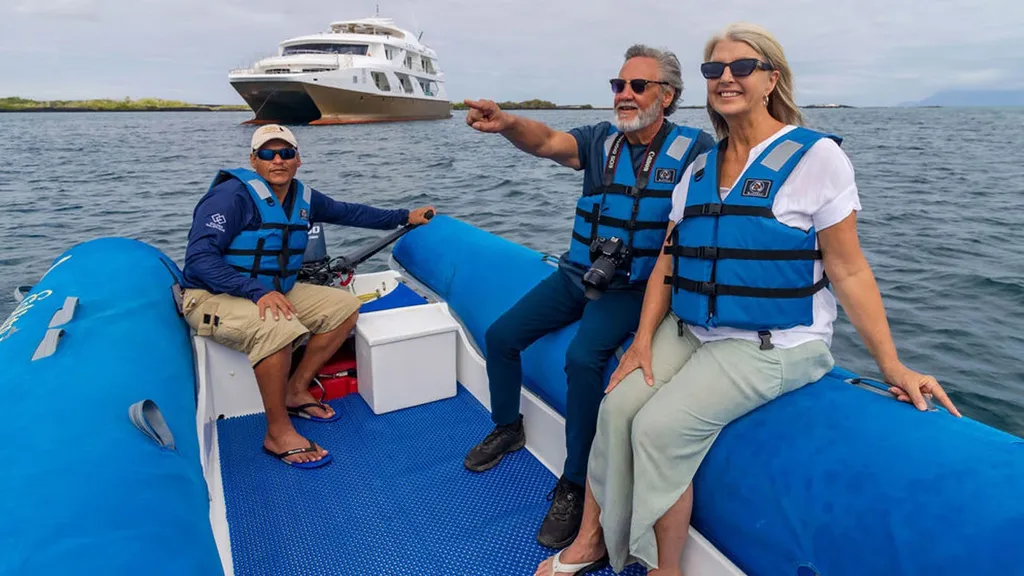
The twin-hulled Galapagos Elite catamaran ensures a secure and serene voyage to maximize your comfort. Built for the Galapagos, the design harmoniously blends indoor and outdoor spaces, providing abundant room for each guest.


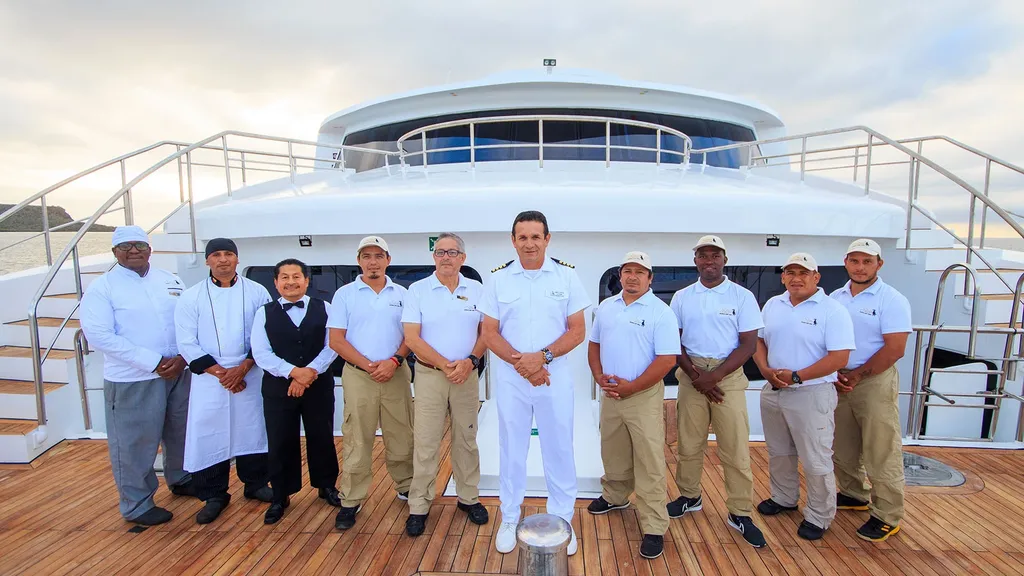
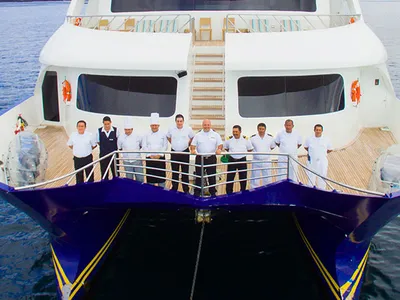
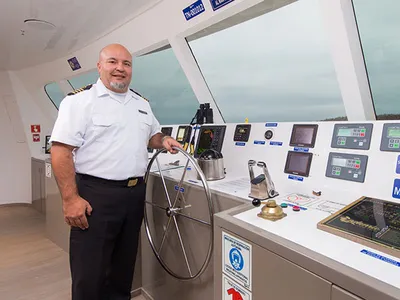
Crew was professional and personable, interested in our experience and very attentive. Panga drivers were skilled, and watched out for us in and out of boat, good smiles. Food was extraordinary, varied with attention to detail. Bar and food service host was so attentive and lovely. Guide was the best I have had in all my travels. He is clearly educated in multiple areas and could answer all nature questions. His love for nature is obvious. Love his sense of humor and positivity.
- Sharon
For: The Elite Galapagos CruiseThe Elite Galapagos Cruise Accommodation
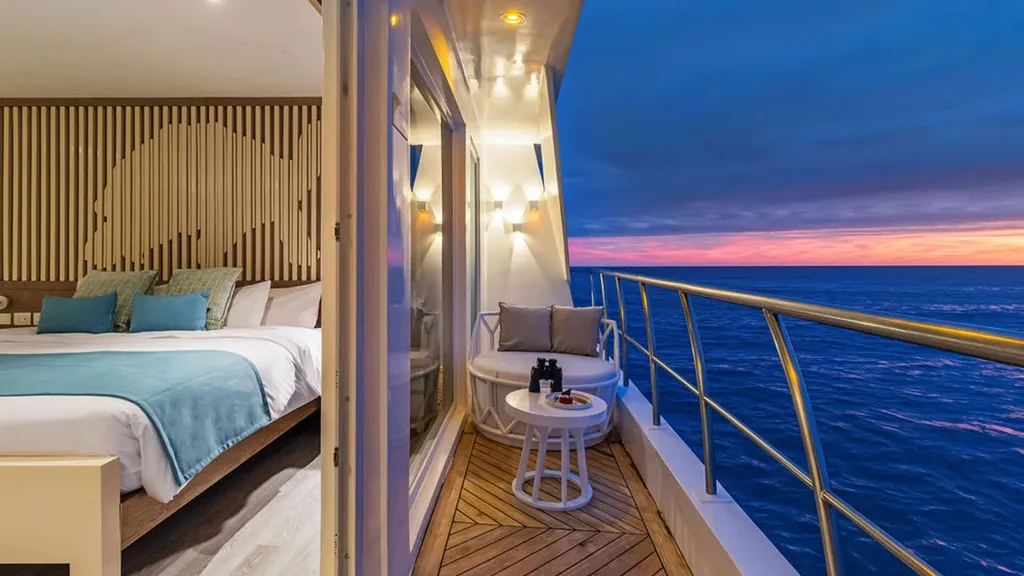
You can fully relax in our sumptuous Suites before and after your exciting activities. Panoramic windows frame breathtaking ocean vistas and bathe your suite with natural light. Beds can be configured as twin or king-size for personalized comfort.
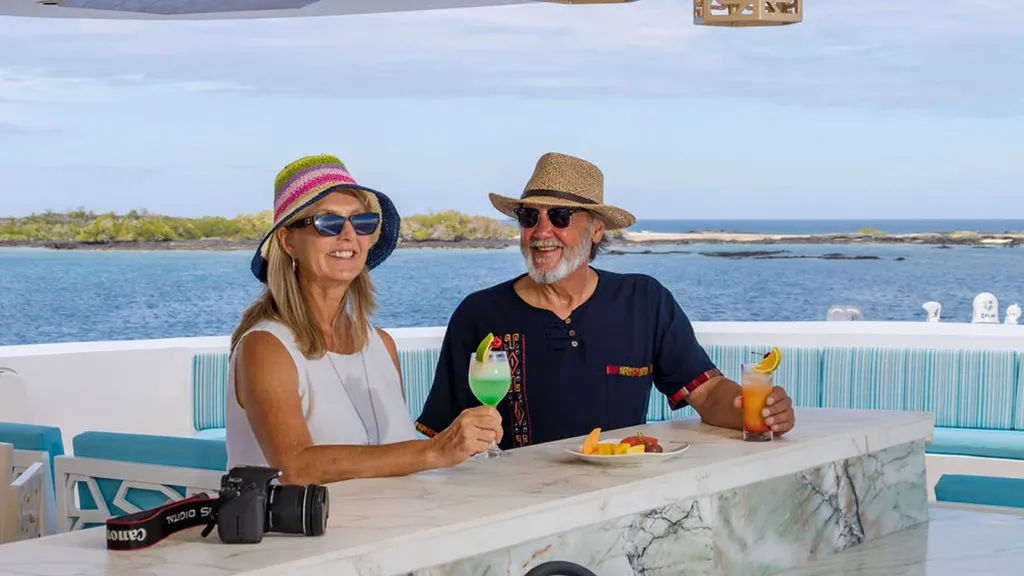
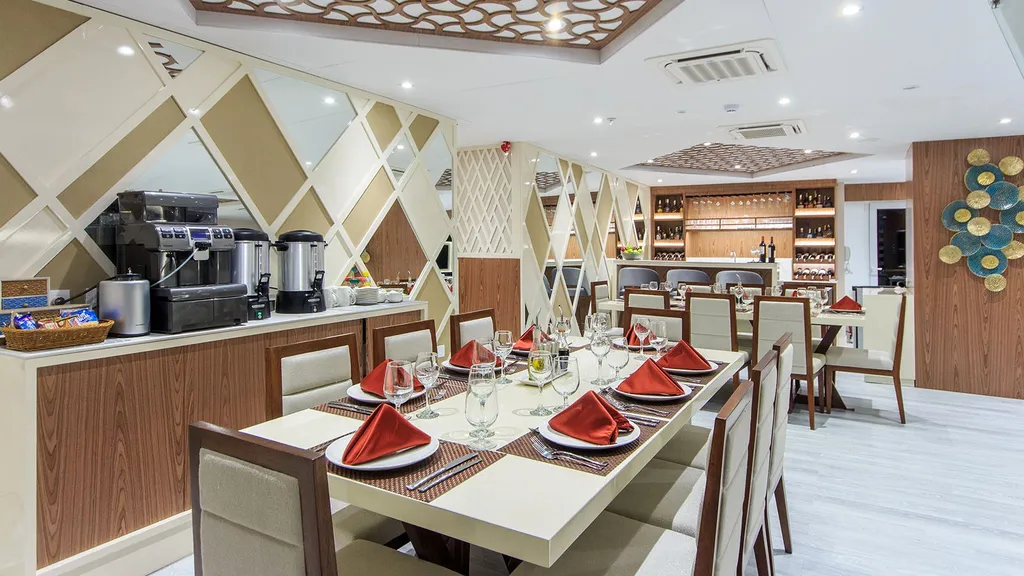
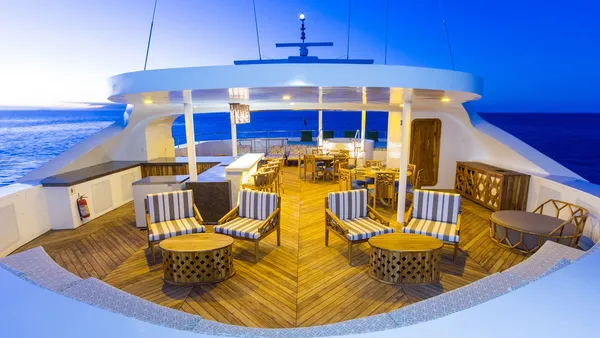
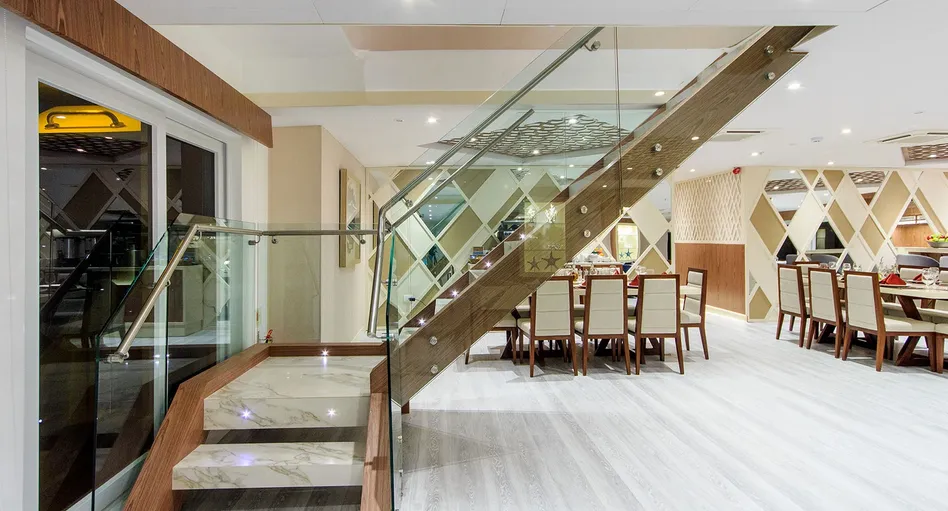
Savor a culinary odyssey orchestrated by our gastronomic specialists. Delight in three daily meals: buffet-style breakfasts, lavish lunches, and sophisticated al fresco dinners on the sky deck. We cater to special dietary needs and offer delightful kids’ meals. The Elite caters to guests of all ages, with spacious sky decks, al fresco dining areas, and inviting bar-salons. The passenger lounge also boasts 180-degree panoramic vistas.
The Elite Galapagos Cruise Tour Summary
Aboard the Elite, you will enjoy captivating itineraries, exploring the wonders of the Western, Central, and Eastern Galapagos Islands.
Embark on our exclusive itineraries to pristine islands and secluded visitor points abundant with extraordinary animals and scenery. Choose from short or long Elite cruises with daily Galapagos expeditions led by skilled Galapagos National Park guides.
Video Introduction
Tour Info
- Country: Ecuador
- Focus Area: Galapagos National Park
- Duration: 4, 5, 8 days
- Start Point: Baltra Airport (GPS)
- End Point: Baltra Airport (GPS)
The Elite Galapagos Cruise Itinerary
Choose your itinerary
Click a duration to see the day-by-day programme for this cruise.
Other itinerary lengths may be available — send a request to check options and pricing.
Day 1 · Saturday
San Cristobal Arrival & David Rodriguez Breeding Center
You'll land at San Cristóbal Airport, where the crew is waiting to bring you to the vessel. At the David Rodríguez Breeding Center you'll learn how the giant tortoise evolved and why the center plays such a key role in protecting its future. A walk through the reserve trails often turns up baby tortoises along the way.
Day 2 · Sunday
Suarez Point, Gardner Bay & Osborn and Gardner Islets
Suárez Point is a favourite among veteran Galápagos guides, and it's the one place in the islands where you can reliably expect to see the waved albatross. On Española Island, Gardner Bay offers a white sand beach where you can relax, snorkel or just soak up the sun next to sleeping sea lions. Or you might spend that time at Osborn and Gardner Islets, a strong spot for underwater exploration and snorkelling.
Day 3 · Monday
Cormorant Point or Post Office Bay
Cormorant Point is a walk across green olivine sand leading to a lagoon where flamingos gather, or you'll visit Post Office Bay, where you can leave a letter in the barrel that whalers once used to send mail home.
Day 4 · Tuesday
Mosquera Islet & Departure
Mosquera Islet is a long sand bank stretching over 600 metres, home to one of the largest sea lion populations in the Galápagos, along with lava gulls, Sally lightfoot crabs and the occasional orca offshore. After this last stop you'll be transferred to Baltra Airport for your flight home.
Day 1 · Tuesday
Baltra Arrival & Bachas Beach
You'll land at Baltra Island Airport, where the crew meets you and takes you straight to the vessel. Bachas Beach is a relaxed spot for a swim or an easy snorkel just offshore.
Day 2 · Wednesday
Prince Philip's Steps & Darwin Bay
A stone stairway known as Prince Philip's Steps climbs through a small patch of Scalesia forest, home to the short-eared owl. Darwin Bay sits within the long-eroded rim of a prehistoric volcanic crater, where great frigatebirds gather on the beach and red-footed boobies nest in the trees above.
Day 3 · Thursday
Buccaneer Cove, Espumilla Beach & Egas Port
Buccaneer Cove was once a stop for pirates and whalers repairing ships and loading tortoises, and today it's a peaceful spot for a zodiac ride, snorkelling or kayaking, or you might instead spend the time at Espumilla Beach, known for marine iguanas, Sally lightfoot crabs, herons and octopi along its pale sand. The day finishes at Egas Port, a black sand beach once mined for salt and now a solid spot for snorkelling and shorebird watching.
Day 4 · Friday
Black Turtle Cove, Santa Cruz Highlands & Fausto Llerena Breeding Center
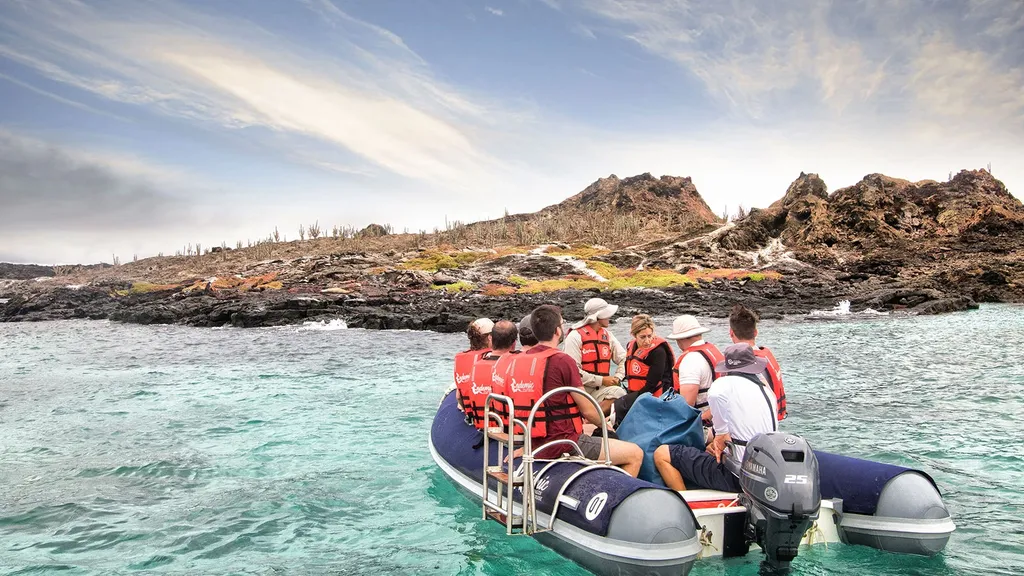
Black Turtle Cove is explored quietly by panga, with sharks, sea turtles, herons and the occasional school of golden rays moving through the shallows. Up in the Santa Cruz highlands, giant tortoises roam freely among sinkholes and lava tunnels. The Fausto Llerena Breeding Center closes out the day, where tortoises of different subspecies are raised and prepared for reintroduction to the wild.
Day 5 · Saturday
Lobos Island & Departure
In the afternoon you'll head to Lobos Island to snorkel alongside sea lions before being transferred to San Cristóbal Airport, where the team assists with check-in for your flight home.
Day 1 · Saturday
San Cristobal Arrival & David Rodriguez Breeding Center
You'll land at San Cristóbal Airport, where the crew is waiting to bring you to the vessel. At the David Rodríguez Breeding Center you'll learn how the giant tortoise evolved and why the center plays such a key role in protecting its future, with baby tortoises often visible along the reserve trails.
Day 2 · Sunday
Suarez Point, Gardner Bay & Osborn and Gardner Islets
Suárez Point is a favourite among veteran Galápagos guides, and it's the one place in the islands where you can reliably expect to see the waved albatross. Gardner Bay, on Española Island, offers a white sand beach for relaxing, snorkelling or sunbathing next to sleeping sea lions. Some sailings substitute a visit to the Osborn and Gardner Islets, a strong spot for underwater exploration.
Day 3 · Monday
Cormorant Point, Devil's Crown, Post Office Bay & The Baroness' Overlook
Cormorant Point is a walk across green olivine sand leading to a lagoon where flamingos gather, or you'll visit Post Office Bay, where you can leave a letter in the barrel that whalers once used to send mail home. Devil's Crown, a submerged volcanic crater off Floreana Island, is one of the best places in the Galápagos to snorkel with sharks, sea turtles and rays. The Baroness' Overlook rounds out the day with sweeping views across the Floreana coastline.
Day 4 · Tuesday
Mosquera Islet & Bachas Beach
Mosquera Islet is a long sand bank stretching over 600 metres, home to one of the largest sea lion populations in the Galápagos, along with lava gulls, Sally lightfoot crabs and the occasional orca offshore. Bachas Beach follows in the afternoon, a relaxed spot for a swim or an easy snorkel just offshore.
Day 5 · Wednesday
Prince Philip's Steps & Darwin Bay
A stone stairway known as Prince Philip's Steps climbs through a small patch of Scalesia forest, home to the short-eared owl. Darwin Bay sits within the long-eroded rim of a prehistoric volcanic crater, where great frigatebirds gather on the beach and red-footed boobies nest in the trees above.
Day 6 · Thursday
Espumilla Beach, Buccaneer Cove & Egas Port
Espumilla Beach is known for marine iguanas, Sally lightfoot crabs, herons and octopi along its pale sand. Buccaneer Cove follows, once a stop for pirates and whalers repairing ships and loading tortoises, now a peaceful spot for a zodiac ride, snorkelling or kayaking. The day finishes at Egas Port, a black sand beach once mined for salt and now a solid spot for snorkelling and shorebird watching.
Day 7 · Friday
Black Turtle Cove, Santa Cruz Highlands & Charles Darwin Research Station
Black Turtle Cove is explored quietly by panga, with sharks, sea turtles, herons and the occasional school of golden rays moving through the shallows. Up in the Santa Cruz highlands, giant tortoises roam freely among sinkholes and lava tunnels. The Charles Darwin Research Station closes out the day, where tortoises of different subspecies are bred and prepared for reintroduction to the wild.
Day 8 · Saturday
Lobos Island & Departure
In the afternoon you'll head to Lobos Island to snorkel alongside sea lions before being transferred to San Cristóbal Airport, where the team assists with check-in for your flight home.
Day 1 · Saturday
San Cristobal Arrival & El Junco Lagoon
You'll land at San Cristóbal Airport, where the crew is waiting to bring you to the vessel. El Junco Lagoon is a crater lake set in the island's highlands, with panoramic views across San Cristóbal from the rim.
Day 2 · Sunday
North Seymour Island & Dragon Hill
North Seymour Island holds the largest colony of magnificent frigatebirds in the Galápagos, along with blue-footed boobies performing their courtship dance. At Dragon Hill, in the northwest of Santa Cruz Island, a walk inland brings you to land iguanas, a flamingo lagoon and pintail ducks, with a chance to snorkel offshore before heading back to the yacht.
Day 3 · Monday
Tintoreras & Sierra Negra Volcano
Las Tintoreras is a chain of islets off Isabela Island, well suited to a dinghy ride, snorkelling, kayaking or paddleboarding. Sierra Negra, one of the most active volcanoes in the Galápagos, holds the second largest caldera in the world. At the Arnaldo Tupiza Breeding Center on Isabela, you'll see infant and juvenile tortoises being raised until they're ready for release into the wild.
Day 4 · Tuesday
Moreno Point & Urbina Bay
Moreno Point rewards anyone interested in geology and birds alike, with a shoreline of rough lava left behind by an eruption decades ago. Urbina Bay follows, where uplifted coral formations sit alongside land iguanas, giant tortoises and lava lizards.
Day 5 · Wednesday
Espinoza Point & Vicente Roca Point
Espinoza Point sits within a striking lava landscape dotted with lava cactus, with mangroves growing straight out of the rock. A dinghy ride brings you into Vicente Roca Point, a wide bay split into two coves where cooler water draws in an abundance of marine life, and it's common to spot whales, dolphins and sea lions while you snorkel.
Day 6 · Thursday
Rabida Island & Bartholomew Island
Rabida Island is known for its red sand beach, framed by cactus groves and striking rock formations. Bartholomew Island follows, home to Pinnacle Rock, one of the most recognisable formations in the Galápagos, with a beach at its base that's ideal for snorkelling alongside penguins.
Day 7 · Friday
Kicker Rock, Witch Hill & Pitt Point
Kicker Rock is an impressive formation shaped by centuries of erosion, and the boat circles it slowly for photos as the light shifts. Witch Hill offers a dinghy ride past dramatic rock formations along the shoreline before you land on a white sand beach with some of the clearest water in the islands. Pitt Point closes the day, a spot that feels unlike anywhere else in the Galápagos, almost like stepping onto a different planet.
Day 8 · Saturday
San Cristobal Interpretation Center & Departure
The San Cristóbal Interpretation Center walks you through the history of the islands across a series of exhibits, before you're transferred to San Cristóbal Airport, where the team assists with check-in for your flight home.
Day 1 · Saturday
San Cristobal Arrival & El Junco Lagoon
You'll land at San Cristóbal Airport, where the crew is waiting to bring you to the vessel. El Junco Lagoon is a crater lake set in the island's highlands, with panoramic views across San Cristóbal from the rim.
Day 2 · Sunday
North Seymour Island & Dragon Hill
North Seymour Island holds the largest colony of magnificent frigatebirds in the Galápagos, along with blue-footed boobies performing their courtship dance. At Dragon Hill, in the northwest of Santa Cruz Island, a walk inland brings you to land iguanas, a flamingo lagoon and pintail ducks, with a chance to snorkel offshore before heading back to the yacht.
Day 3 · Monday
Tintoreras & Sierra Negra Volcano
Las Tintoreras is a chain of islets off Isabela Island, well suited to a dinghy ride, snorkelling, kayaking or paddleboarding. Sierra Negra, one of the most active volcanoes in the Galápagos, holds the second largest caldera in the world. At the Arnaldo Tupiza Breeding Center you'll see infant and juvenile tortoises being raised until they're ready for release into the wild.
Day 4 · Tuesday
Moreno Point & Urbina Bay
Moreno Point rewards anyone interested in geology and birds alike, with a shoreline of rough lava left behind by an eruption decades ago. Urbina Bay follows, where uplifted coral formations sit alongside land iguanas, giant tortoises and lava lizards.
Day 5 · Wednesday
Espinoza Point & Vicente Roca Point
Espinoza Point sits within a striking lava landscape dotted with lava cactus, with mangroves growing straight out of the rock. A dinghy ride brings you into Vicente Roca Point, a wide bay split into two coves where cooler water draws in an abundance of marine life, and it's common to spot whales, dolphins and sea lions while you snorkel.
Day 6 · Thursday
Rabida Island & Bartholomew Island
Rabida Island is known for its red sand beach, framed by cactus groves and striking rock formations. Bartholomew Island follows, home to Pinnacle Rock, one of the most recognisable formations in the Galápagos, with a beach at its base that's ideal for snorkelling alongside penguins.
Day 7 · Friday
Kicker Rock, Witch Hill & Giant Tortoises' Reserve
Kicker Rock is an impressive formation shaped by centuries of erosion, and the boat circles it slowly for photos as the light shifts. Witch Hill offers a dinghy ride past dramatic rock formations along the shoreline before you land on a white sand beach with clear water. A 5 kilometre hike through the Giant Tortoises' Reserve rounds out the day, a strong spot for observing tortoises in the wild alongside lava lizards and mockingbirds.
Day 8 · Saturday
San Cristobal Interpretation Center & David Rodriguez Breeding Center
The San Cristóbal Interpretation Center walks you through the history of the islands across a series of exhibits. At the David Rodríguez Breeding Center you'll learn how the giant tortoise evolved and why the center plays such a key role in protecting its future, with baby tortoises often visible along the reserve trails.
Day 9 · Sunday
Suarez Point, Gardner Bay & Osborn and Gardner Islets
Suárez Point is a favourite among veteran Galápagos guides, and it's the one place in the islands where you can reliably expect to see the waved albatross. Gardner Bay, on Española Island, offers a white sand beach for relaxing, snorkelling or sunbathing next to sleeping sea lions. Some sailings substitute a visit to the Osborn and Gardner Islets, a strong spot for underwater exploration.
Day 10 · Monday
Cormorant Point, Devil's Crown, Post Office Bay & The Baroness' Overlook
Cormorant Point is a walk across green olivine sand leading to a lagoon where flamingos gather, or you'll visit Post Office Bay, where you can leave a letter in the barrel that whalers once used to send mail home. Devil's Crown, a submerged volcanic crater off Floreana Island, is one of the best places in the Galápagos to snorkel with sharks, sea turtles and rays. The Baroness' Overlook rounds out the day with sweeping views across the Floreana coastline.
Day 11 · Tuesday
Mosquera Islet & Departure
Mosquera Islet is a long sand bank stretching over 600 metres, home to one of the largest sea lion populations in the Galápagos, along with lava gulls, Sally lightfoot crabs and the occasional orca offshore. After this last stop you'll be transferred to Baltra Airport for your flight home.
Day 1 · Tuesday
Baltra Arrival & Bachas Beach
You'll land at Baltra Island Airport, where the crew meets you and takes you straight to the vessel. Bachas Beach is a relaxed spot for a swim or an easy snorkel just offshore.
Day 2 · Wednesday
Prince Philip's Steps & Darwin Bay
A stone stairway known as Prince Philip's Steps climbs through a small patch of Scalesia forest, home to the short-eared owl. Darwin Bay sits within the long-eroded rim of a prehistoric volcanic crater, where great frigatebirds gather on the beach and red-footed boobies nest in the trees above.
Day 3 · Thursday
Espumilla Beach, Buccaneer Cove & Egas Port
Espumilla Beach is known for marine iguanas, Sally lightfoot crabs, herons and octopi along its pale sand. Buccaneer Cove follows, once a stop for pirates and whalers repairing ships and loading tortoises, now a peaceful spot for a zodiac ride, snorkelling or kayaking. The day finishes at Egas Port, a black sand beach once mined for salt and now a solid spot for snorkelling and shorebird watching.
Day 4 · Friday
Black Turtle Cove, Santa Cruz Highlands & Charles Darwin Research Station
Black Turtle Cove is explored quietly by panga, with sharks, sea turtles, herons and the occasional school of golden rays moving through the shallows. Up in the Santa Cruz highlands, giant tortoises roam freely among sinkholes and lava tunnels. The Charles Darwin Research Station closes out the day, where tortoises of different subspecies are bred and prepared for reintroduction to the wild.
Day 5 · Saturday
Lobos Island & El Junco Lagoon
In the afternoon you'll head to Lobos Island to snorkel alongside sea lions. El Junco Lagoon follows, a crater lake set in the island's highlands with panoramic views across San Cristóbal.
Day 6 · Sunday
North Seymour Island & Dragon Hill
North Seymour Island holds the largest colony of magnificent frigatebirds in the Galápagos, along with blue-footed boobies performing their courtship dance. At Dragon Hill, a walk inland brings you to land iguanas, a flamingo lagoon and pintail ducks, with a chance to snorkel offshore before heading back to the yacht.
Day 7 · Monday
Tintoreras & Sierra Negra Volcano
Las Tintoreras is a chain of islets off Isabela Island, well suited to a dinghy ride, snorkelling, kayaking or paddleboarding. Sierra Negra, one of the most active volcanoes in the Galápagos, holds the second largest caldera in the world. At the Arnaldo Tupiza Breeding Center you'll see infant and juvenile tortoises being raised until they're ready for release into the wild.
Day 8 · Tuesday
Moreno Point & Urbina Bay
Moreno Point rewards anyone interested in geology and birds alike, with a shoreline of rough lava left behind by an eruption decades ago. Urbina Bay follows, where uplifted coral formations sit alongside land iguanas, giant tortoises and lava lizards.
Day 9 · Wednesday
Espinoza Point & Vicente Roca Point
Espinoza Point sits within a striking lava landscape dotted with lava cactus, with mangroves growing straight out of the rock. A dinghy ride brings you into Vicente Roca Point, a wide bay split into two coves where cooler water draws in an abundance of marine life, and it's common to spot whales, dolphins and sea lions while you snorkel.
Day 10 · Thursday
Rabida Island & Bartholomew Island
Rabida Island is known for its red sand beach, framed by cactus groves and striking rock formations. Bartholomew Island follows, home to Pinnacle Rock, one of the most recognisable formations in the Galápagos, with a beach at its base that's ideal for snorkelling alongside penguins.
Day 11 · Friday
Kicker Rock, Witch Hill & Giant Tortoises' Reserve
Kicker Rock is an impressive formation shaped by centuries of erosion, and the boat circles it slowly for photos as the light shifts. Witch Hill offers a dinghy ride past dramatic rock formations along the shoreline before you land on a white sand beach with clear water. A 5 kilometre hike through the Giant Tortoises' Reserve rounds out the day, a strong spot for observing tortoises in the wild alongside lava lizards and mockingbirds.
Day 12 · Saturday
San Cristobal Interpretation Center & Departure
The San Cristóbal Interpretation Center walks you through the history of the islands across a series of exhibits, before you're transferred to San Cristóbal Airport, where the team assists with check-in for your flight home.
Day 1 · Saturday
San Cristobal Arrival & David Rodriguez Breeding Center
You'll land at San Cristóbal Airport, where the crew is waiting to bring you to the vessel. At the David Rodríguez Breeding Center you'll learn how the giant tortoise evolved and why the center plays such a key role in protecting its future, with baby tortoises often visible along the reserve trails.
Day 2 · Sunday
Suarez Point, Gardner Bay & Osborn and Gardner Islets
Suárez Point is a favourite among veteran Galápagos guides, and it's the one place in the islands where you can reliably expect to see the waved albatross. Gardner Bay, on Española Island, offers a white sand beach for relaxing, snorkelling or sunbathing next to sleeping sea lions. Some sailings substitute a visit to the Osborn and Gardner Islets, a strong spot for underwater exploration.
Day 3 · Monday
Cormorant Point, Devil's Crown, Post Office Bay & The Baroness' Overlook
Cormorant Point is a walk across green olivine sand leading to a lagoon where flamingos gather, or you'll visit Post Office Bay, where you can leave a letter in the barrel that whalers once used to send mail home. Devil's Crown, a submerged volcanic crater off Floreana Island, is one of the best places in the Galápagos to snorkel with sharks, sea turtles and rays. The Baroness' Overlook rounds out the day with sweeping views across the Floreana coastline.
Day 4 · Tuesday
Mosquera Islet & Bachas Beach
Mosquera Islet is a long sand bank stretching over 600 metres, home to one of the largest sea lion populations in the Galápagos, along with lava gulls, Sally lightfoot crabs and the occasional orca offshore. Bachas Beach follows in the afternoon, a relaxed spot for a swim or an easy snorkel just offshore.
Day 5 · Wednesday
Prince Philip's Steps & Darwin Bay
A stone stairway known as Prince Philip's Steps climbs through a small patch of Scalesia forest, home to the short-eared owl. Darwin Bay sits within the long-eroded rim of a prehistoric volcanic crater, where great frigatebirds gather on the beach and red-footed boobies nest in the trees above.
Day 6 · Thursday
Espumilla Beach, Buccaneer Cove & Egas Port
Espumilla Beach is known for marine iguanas, Sally lightfoot crabs, herons and octopi along its pale sand. Buccaneer Cove follows, once a stop for pirates and whalers repairing ships and loading tortoises, now a peaceful spot for a zodiac ride, snorkelling or kayaking. The day finishes at Egas Port, a black sand beach once mined for salt and now a solid spot for snorkelling and shorebird watching.
Day 7 · Friday
Black Turtle Cove, Santa Cruz Highlands & Charles Darwin Research Station
Black Turtle Cove is explored quietly by panga, with sharks, sea turtles, herons and the occasional school of golden rays moving through the shallows. Up in the Santa Cruz highlands, giant tortoises roam freely among sinkholes and lava tunnels. The Charles Darwin Research Station closes out the day, where tortoises of different subspecies are bred and prepared for reintroduction to the wild.
Day 8 · Saturday
Lobos Island & El Junco Lagoon
In the afternoon you'll head to Lobos Island to snorkel alongside sea lions. El Junco Lagoon follows, a crater lake set in the island's highlands with panoramic views across San Cristóbal.
Day 9 · Sunday
North Seymour Island & Dragon Hill
North Seymour Island holds the largest colony of magnificent frigatebirds in the Galápagos, along with blue-footed boobies performing their courtship dance. At Dragon Hill, a walk inland brings you to land iguanas, a flamingo lagoon and pintail ducks, with a chance to snorkel offshore before heading back to the yacht.
Day 10 · Monday
Tintoreras & Sierra Negra Volcano
Las Tintoreras is a chain of islets off Isabela Island, well suited to a dinghy ride, snorkelling, kayaking or paddleboarding. Sierra Negra, one of the most active volcanoes in the Galápagos, holds the second largest caldera in the world. At the Arnaldo Tupiza Breeding Center you'll see infant and juvenile tortoises being raised until they're ready for release into the wild.
Day 11 · Tuesday
Moreno Point & Urbina Bay
Moreno Point rewards anyone interested in geology and birds alike, with a shoreline of rough lava left behind by an eruption decades ago. Urbina Bay follows, where uplifted coral formations sit alongside land iguanas, giant tortoises and lava lizards.
Day 12 · Wednesday
Espinoza Point & Vicente Roca Point
Espinoza Point sits within a striking lava landscape dotted with lava cactus, with mangroves growing straight out of the rock. A dinghy ride brings you into Vicente Roca Point, a wide bay split into two coves where cooler water draws in an abundance of marine life, and it's common to spot whales, dolphins and sea lions while you snorkel.
Day 13 · Thursday
Rabida Island & Bartholomew Island
Rabida Island is known for its red sand beach, framed by cactus groves and striking rock formations. Bartholomew Island follows, home to Pinnacle Rock, one of the most recognisable formations in the Galápagos, with a beach at its base that's ideal for snorkelling alongside penguins.
Day 14 · Friday
Kicker Rock, Witch Hill & Giant Tortoises' Reserve
Kicker Rock is an impressive formation shaped by centuries of erosion, and the boat circles it slowly for photos as the light shifts. Witch Hill offers a dinghy ride past dramatic rock formations along the shoreline before you land on a white sand beach with clear water. A 5 kilometre hike through the Giant Tortoises' Reserve rounds out the day, a strong spot for observing tortoises in the wild alongside lava lizards and mockingbirds.
Day 15 · Saturday
San Cristobal Interpretation Center & Departure
The San Cristóbal Interpretation Center walks you through the history of the islands across a series of exhibits, before you're transferred to San Cristóbal Airport, where the team assists with check-in for your flight home.
Day 1 · Saturday
San Cristobal Arrival & El Junco Lagoon
You'll land at San Cristóbal Airport, where the crew is waiting to bring you to the vessel. El Junco Lagoon is a crater lake set in the island's highlands, with panoramic views across San Cristóbal from the rim.
Day 2 · Sunday
North Seymour Island & Dragon Hill
North Seymour Island holds the largest colony of magnificent frigatebirds in the Galápagos, along with blue-footed boobies performing their courtship dance. At Dragon Hill, a walk inland brings you to land iguanas, a flamingo lagoon and pintail ducks, with a chance to snorkel offshore before heading back to the yacht.
Day 3 · Monday
Tintoreras & Sierra Negra Volcano
Las Tintoreras is a chain of islets off Isabela Island, well suited to a dinghy ride, snorkelling, kayaking or paddleboarding. Sierra Negra, one of the most active volcanoes in the Galápagos, holds the second largest caldera in the world. At the Arnaldo Tupiza Breeding Center you'll see infant and juvenile tortoises being raised until they're ready for release into the wild.
Day 4 · Tuesday
Moreno Point & Urbina Bay
Moreno Point rewards anyone interested in geology and birds alike, with a shoreline of rough lava left behind by an eruption decades ago. Urbina Bay follows, where uplifted coral formations sit alongside land iguanas, giant tortoises and lava lizards.
Day 5 · Wednesday
Espinoza Point & Vicente Roca Point
Espinoza Point sits within a striking lava landscape dotted with lava cactus, with mangroves growing straight out of the rock. A dinghy ride brings you into Vicente Roca Point, a wide bay split into two coves where cooler water draws in an abundance of marine life, and it's common to spot whales, dolphins and sea lions while you snorkel.
Day 6 · Thursday
Rabida Island & Bartholomew Island
Rabida Island is known for its red sand beach, framed by cactus groves and striking rock formations. Bartholomew Island follows, home to Pinnacle Rock, one of the most recognisable formations in the Galápagos, with a beach at its base that's ideal for snorkelling alongside penguins.
Day 7 · Friday
Kicker Rock, Witch Hill & Giant Tortoises' Reserve
Kicker Rock is an impressive formation shaped by centuries of erosion, and the boat circles it slowly for photos as the light shifts. Witch Hill offers a dinghy ride past dramatic rock formations along the shoreline before you land on a white sand beach with clear water. A 5 kilometre hike through the Giant Tortoises' Reserve rounds out the day, a strong spot for observing tortoises in the wild alongside lava lizards and mockingbirds.
Day 8 · Saturday
San Cristobal Interpretation Center & David Rodriguez Breeding Center
The San Cristóbal Interpretation Center walks you through the history of the islands across a series of exhibits. At the David Rodríguez Breeding Center you'll learn how the giant tortoise evolved and why the center plays such a key role in protecting its future, with baby tortoises often visible along the reserve trails.
Day 9 · Sunday
Suarez Point, Gardner Bay & Osborn and Gardner Islets
Suárez Point is a favourite among veteran Galápagos guides, and it's the one place in the islands where you can reliably expect to see the waved albatross. Gardner Bay, on Española Island, offers a white sand beach for relaxing, snorkelling or sunbathing next to sleeping sea lions. Some sailings substitute a visit to the Osborn and Gardner Islets, a strong spot for underwater exploration.
Day 10 · Monday
Cormorant Point, Devil's Crown, Post Office Bay & The Baroness' Overlook
Cormorant Point is a walk across green olivine sand leading to a lagoon where flamingos gather, or you'll visit Post Office Bay, where you can leave a letter in the barrel that whalers once used to send mail home. Devil's Crown, a submerged volcanic crater off Floreana Island, is one of the best places in the Galápagos to snorkel with sharks, sea turtles and rays. The Baroness' Overlook rounds out the day with sweeping views across the Floreana coastline.
Day 11 · Tuesday
Mosquera Islet & Bachas Beach
Mosquera Islet is a long sand bank stretching over 600 metres, home to one of the largest sea lion populations in the Galápagos, along with lava gulls, Sally lightfoot crabs and the occasional orca offshore. Bachas Beach follows in the afternoon, a relaxed spot for a swim or an easy snorkel just offshore.
Day 12 · Wednesday
Prince Philip's Steps & Darwin Bay
A stone stairway known as Prince Philip's Steps climbs through a small patch of Scalesia forest, home to the short-eared owl. Darwin Bay sits within the long-eroded rim of a prehistoric volcanic crater, where great frigatebirds gather on the beach and red-footed boobies nest in the trees above.
Day 13 · Thursday
Espumilla Beach, Buccaneer Cove & Egas Port
Espumilla Beach is known for marine iguanas, Sally lightfoot crabs, herons and octopi along its pale sand. Buccaneer Cove follows, once a stop for pirates and whalers repairing ships and loading tortoises, now a peaceful spot for a zodiac ride, snorkelling or kayaking. The day finishes at Egas Port, a black sand beach once mined for salt and now a solid spot for snorkelling and shorebird watching.
Day 14 · Friday
Black Turtle Cove, Santa Cruz Highlands & Charles Darwin Research Station
Black Turtle Cove is explored quietly by panga, with sharks, sea turtles, herons and the occasional school of golden rays moving through the shallows. Up in the Santa Cruz highlands, giant tortoises roam freely among sinkholes and lava tunnels. The Charles Darwin Research Station closes out the day, where tortoises of different subspecies are bred and prepared for reintroduction to the wild.
Day 15 · Saturday
Lobos Island & Departure
In the afternoon you'll head to Lobos Island to snorkel alongside sea lions before being transferred to San Cristóbal Airport, where the team assists with check-in for your flight home.
The Elite Galapagos Cruise Activities
Snorkeling
Wildlife walks
Kayaking
Paddleboarding
Dinghy and zodiac rides
Panga rides
Birdwatching
Volcano exploration
Crater lake viewpoints
Scenic overlooks
Beach relaxation
Tortoise breeding center visits
Cultural and historical stops
Frequently Asked Questions
The Galapagos is a year-round destination with two distinct seasons. December to May is the warm season with occasional rain showers and warmer waters (perfect for snorkeling). June to November is the cool season with more marine life activity but choppier seas.
Peak tourist seasons are mid-June through early September and mid-December through mid-January. For the best combination of weather and fewer crowds, consider visiting in April/May or November/December.
Note that migration patterns of wildlife and other guest favorites, such as seal pups on the beaches, does change, so please get in touch with the request form and let us know your interests and possible travel dates.
Yes! Children are more than welcome and the Elite can even provide children's meals. The recommended minimum age for children is 6 years old, but please get in touch for more details. The children's rates policy is as follows:
The 25% discount for children applies per child (#1) when traveling with two adults. Children must be under 12 years old when they board the cruise. Not applicable on New Years’ Eve and Christmas departures.
The Elite rate includes your transfers in the Galapagos (airport/catamaran/airport), airport reception and assistance, meals, guided services and accommodation. For other inclusions and information, you can click the rates tab (next tab).
Activities vary from easy to moderate. A typical day includes 1-2 shore excursions with walks on uneven terrain (1-2 hours each), and optional snorkeling. While you don't need to be an athlete, you should be able to walk for 2 hours, climb stairs, and get in/out of small boats (pangas).
If you would like more assistance, please let us know and remember you're free to skip some activities to relax aboard the vessel.
The Elite is one of the most stable vessels on the Galapagos due to to being a modern catamaran specifically designed for the Galapagos. However, note that June to November (the cooler season) are when you find choppier seas. Motion sickness tablets are recommended just in case.
For peak seasons (Christmas/New Year's, July/August), book 9-12 months in advance. For shoulder seasons, 6-9 months is recommended. The Elite is one of the premium vessels and books quickly, so please book as early as you can so you don't miss out.
Pack light, casual clothing: quick-dry shorts/pants, t-shirts, light long-sleeve shirts (sun protection), swimwear, water shoes, hiking shoes, sandals, sun hat, sunglasses, and rain jacket. Don't forget: sunscreen (reef-safe), insect repellent, motion sickness medication, and camera. Evening wear is casual - no formal nights. We can provide detailed packing lists after booking.
While wildlife viewing varies by season and island, you're likely to see: giant tortoises, marine iguanas, sea lions, blue-footed boobies, frigate birds, and Sally Lightfoot crabs year-round. Penguins are commonly seen in the western islands.Different species of birds breed at different times.
Marine life includes sea turtles, rays, and tropical fish. Each island offers unique wildlife opportunities, which is why we visit multiple locations. For more information, please get in touch as your choice of itinerary and month of travel will determine specific wildlife chances.
Yes! We also operate La Selva Lodge and Spa. We can help you enjoy a seamless combination experience to enjoy both the Amazon and Galapagos Islands. Send a request with your potential dates to learn more.
Rates & Inclusions
4 days / 3 nights
Golden Suite (Double Occupancy): $4,990
Charter rate: $74,490
5 days / 4 nights
Golden Suite (Double Occupancy): $6,190
Charter rate: $92,390
8 days / 7 nights
Golden Suite (Double Occupancy): $9,990
Charter rate: $149,190
11 days / 10 nights
Per Person : $13,690
Charter rate: $204,390
12 days / 11 nights
Per Person : $14,990
Charter rate: $223,790
15 days / 14 nights
Per Person : $18,690
Charter rate: $278,990
Notes
- Regular rates per person and based on double occupancy.
- Rates are subject to change in case of additional taxes, fuel price increases or any other unforeseen circumstances.
- Suites have king size beds or two twin size beds.
- Rates per person and based on double occupancy.
- New surcharges will be published in a timely manner.
- High Occupancy Dates: A 10% surcharge applies
- High Occupancy Dates: 100% Single Supplement applies
- Single Suite: 50% single supplement for suites
- Single Suite: 100% supplement applies for a second single suite / stateroom in the same booking
- Single Suite: Not applicable on high occupancy dates
- Children Policy: The 25% discount for children applies per child (#1) when traveling with two adults. Children must be under 12 years old when they board the cruise. Not applicable on New Years’ Eve and Christmas departures.
- Supplied Expedition Gear Sea kayaks, Ocean paddle boards, Wetsuits and fins, Water containers, Masks and snorkels, Expedition Binoculars, Action Cameras,
Included
- Transfers in the Galapagos: airport/catamaran/airport
- Airport reception and assistance
- Double or single accommodations
- Guided expeditions based on itineraries
- Top bilingual National Park guide (English / Spanish)
- Cruise Service Officer
- Daily briefings of activities
- All meals and snacks
- Soft drinks and juices
- Captain’s welcome and farewell cocktails
- Supplied expedition gear
- Use of yoga mats
Not Included
- Round trip to Galapagos
- Galapagos National Park Entrance fee ($100 – subject to change)
- Transit Control Card ($20 – subject to change)
- Alcoholic and bottled beverages
- Gratuities for guide and crew
- Travel and health insurance
- Micro SD Card

Operated By Golden Experiences
About Golden Experiences
Golden Experiences & Travel own and operate unique premium experiences in Ecuador, including La Selva Lodge & Spa and the luxury-class Ocean Spray, Endemic, Elite and Petrel cruises for the Galapagos Islands. These modern and luxurious catamarans are spacious, comfortable, steady, and eminently seaworthy, setting a new standard for luxury yachts in the Galapagos
Golden Experiences promotes a sustainable relationship with the natural and social environment. They offer high-quality service, trained motivated staff, responsible management practices, and maintain positive relationships with the communities they work with.

Golden Experiences Details
Explore More Tours

The Ocean Spray Cruise
Baltra Island, Ecuador
Aboard the Ocean Spray Cruise, you will embark on a memorable journey through the mesmerizing Galapagos Islands. The 16-passenger luxury …

The Petrel Luxury Cruise
Baltra Island, Ecuador
The luxurious Petrel Galapagos Cruise offers you an extraordinary journey of the Galapagos Islands. Over 3, 4, 5 or 7-night …