



The Natural Paradise Galapagos Cruise Tour
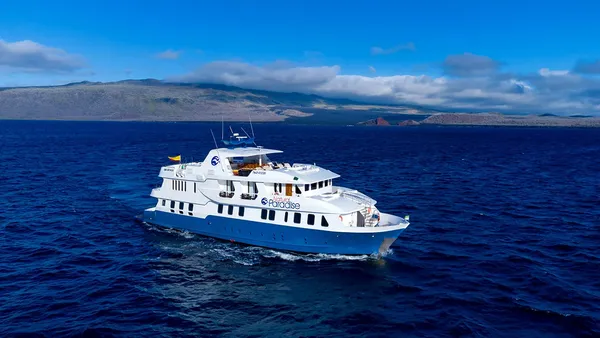
The Natural Paradise Cruise offers you a fantastic, refined and intimate journey through the Galapagos Islands. Designed for comfort and elegance, this luxury yacht accommodates just 16 guests, providing a personalized and tranquil experience on every voyage.
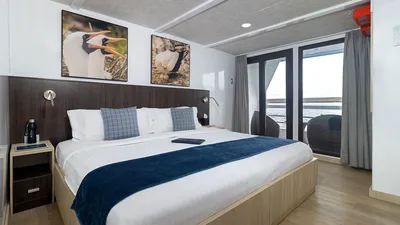
With a choice of spacious cabins, including ocean-view suites with private balconies, junior suites, and staterooms, the Natural Paradise Cruise combines thoughtful design with upscale amenities, ensuring a restful retreat after each day of exploration.
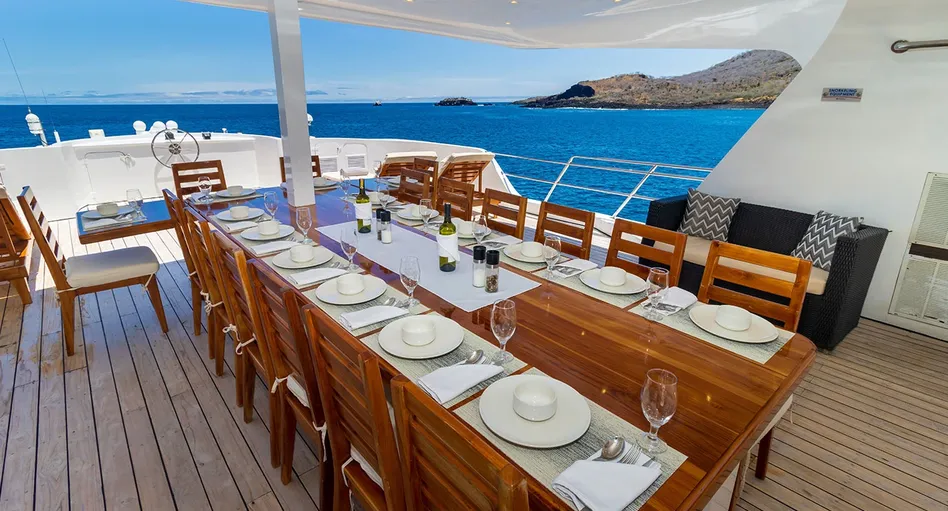
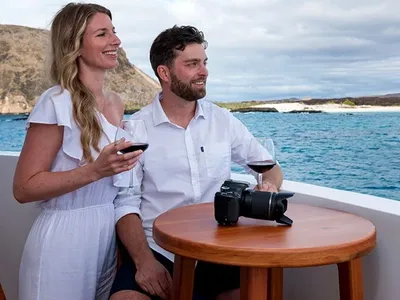
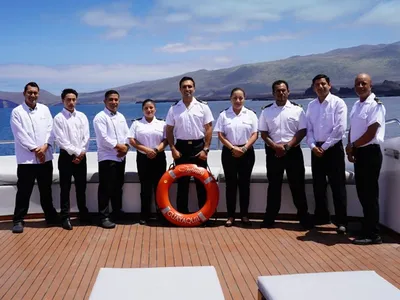
You can enjoy sweeping island vistas from the sundeck and jacuzzi, savor fresh cuisine in the barbecue and al fresco dining areas, and rely on attentive service from a dedicated crew and cruise director. Guided daily by a certified bilingual naturalist, every excursion is crafted to reveal the wonder and wildlife of the Galapagos in luxurious style.
The Natural Paradise Galapagos Cruise Accommodation
The Natural Paradise Galapagos Cruise has nine refined cabins designed for relaxation and privacy, with four upper deck cabins featuring private balconies and a spacious suite located on the main deck.
All cabins include private bathrooms, hot water, and air-conditioning to ensure a luxurious onboard experience. Social areas are thoughtfully appointed, including a teak sundeck with Jacuzzi, an al fresco dining space, and an indoor lounge and dining room.
-
Upper Deck:
• 4 double cabins with private balconies -
Main Deck:
• 3 double cabins
• Dining room, bar, and social lounge -
Lower Deck:
• 2 double cabins
Snorkeling gear, wetsuits, kayaks, and paddle boards are also available for guest use during excursions.
Video Introduction
Tour Info
- Country: Ecuador
- Focus Area: Galapagos National Park
- Duration: 4, 5 & 8 days
- Start Point: Baltra Island / San Cristobal
- End Point: Baltra Island / San Cristobal
The Natural Paradise Galapagos Cruise Itinerary
Choose your itinerary
Click a duration to see the day-by-day programme for this cruise.
Other itineraries may be available — send a request to check options and pricing.
Day 1 · Tuesday
San Cristobal Arrival, Kicker Rock & Witch Hill
You'll land at San Cristóbal Airport, where a Natural Paradise staff member meets you after immigration and baggage claim and brings you to the yacht, with time to settle into your cabin before lunch and the welcome briefing. In the afternoon you'll circumnavigate Kicker Rock, a striking formation a couple of hours off San Cristóbal's western shore, its rock walls rise hundreds of feet straight out of the water, split by a narrow channel. There's no landing, but the boat ride around it turns up sharks, tropical fish, turtles and occasionally manta or hammerhead sharks, along with blue-footed boobies, Nazca boobies and frigatebirds. Afterward, Witch Hill is one of the most picturesque beaches in the islands, an eroded hill backed by powdery white sand, sea turtles, rays and several booby species, with clear water that's excellent for a swim or snorkel among tropical fish, anemones, sponges and coral.
Day 2 · Wednesday
South Plaza Island & Black Turtle Cove
South Plaza is a small island with steep cliffs, formed by rising lava and now covered in Opuntia cactus. It holds one of the largest sea lion colonies in the islands, alongside colourful yellow and red land iguanas, and the Sesuvium ground cover shifts from greenish yellow in the rainy season to bright red through the dry months from late June to January. In the afternoon, Black Turtle Cove, in the northern part of Santa Cruz, is a mangrove-lined inlet only accessible by dinghy since there's no landing. The shallow water here is a haven for young marine life, black-tip and white-tip reef sharks, sea turtles and a variety of rays are all commonly spotted.
Day 3 · Thursday
Rabida Island & Pinnacle Rock
Rábida Island, also called Jervis, is one of the most colourful and volcanically varied islands in the archipelago. You'll start on its famous maroon-red sand beach before an easy hike to a lookout with sweeping views. It's a strong spot for birdwatching too, with several finch species, Galápagos vermilion flycatchers, hawks and brown pelicans all commonly seen. In the afternoon you'll head to Bartolomé Island, home to the famous Pinnacle Rock. Bartolomé is an extinct volcano marked by red, orange, black and even green volcanic rock, and a stairway trail climbs roughly 30 to 40 minutes to the summit for one of the best views in the Galápagos. The beach below, framed by the island's only vegetation, is a strong snorkel spot, sometimes with Galápagos penguins swimming right alongside you.
Day 4 · Friday
Sullivan Bay & Dragon Hill
Sullivan Bay, on the southeast side of Santiago, is a striking site for its geology, the area is covered in lava flows and dotted with small volcanic elevations left behind as the lava cooled. In the afternoon, Dragon Hill is one of the newest visitor sites in the Galápagos, and one of the longer walking trails in the islands leads along a beach and up to a lagoon lookout where flamingos, pintail ducks and land iguanas can be spotted.
Day 5 · Saturday
Highlands, Twin Craters & Fausto Llerena Breeding Center
A bus from Puerto Ayora takes you into the deep green highlands of Santa Cruz, a striking contrast to the dry lowlands. Scalesia forest dominates the landscape, and you'll walk through a lava tunnel stretching over half a mile underground, a genuinely surreal experience, before lunch. From there you'll visit the Twin Craters, set on either side of the road between Puerto Ayora and Baltra, formations created not by volcanic activity but by the collapse of underground chambers, with dramatic views over the resulting pits. In the afternoon you'll visit the Fausto Llerena Breeding Center in Puerto Ayora, where giant tortoises are raised in captivity from three-inch hatchlings to four-foot adults, with several subspecies living side by side and older tortoises often happy to pose for a photo.
Day 6 · Sunday
El Barranco & Darwin Bay
El Barranco, also known as Prince Philip's Steps, is a steep, rocky climb up a cliff face with a marvellous view from the top. The site is home to Palo Santo vegetation and shelters red-footed boobies, short-eared owls, Galápagos storm petrels and Galápagos doves. In the afternoon, Darwin Bay's white coral sand beach opens onto a half-mile trail winding through mangroves filled with land birds, Nazca boobies, red-footed boobies and swallow-tailed gulls are all easy to spot here, and tide pools further along are a favourite play spot for sea lions.
Day 7 · Monday
Espumilla Beach or Buccaneer Cove & Egas Port
Espumilla Beach is a favourite for marine iguanas, and Sally lightfoot crabs draw hunting herons into full view. Snorkelling here is highly recommended, with a good chance of octopus, moray eels, sharks and a wide range of tropical fish. Some sailings substitute a visit to Buccaneer Cove instead, once a refuge for British buccaneers who anchored in the bay to make repairs and stock up on tortoise meat. Steep cliffs lined with seabirds rise above a dark red sand beach, one of the more striking sights in the islands. In the afternoon, Egas Port, also known as James Bay, is home to Galápagos hawks and quick-footed lava lizards, with a trail leading to tide pools and grottos where Galápagos fur seals bathe in the sun, and good snorkelling just offshore.
Day 8 · Tuesday
Bachas Beach & Departure
Bachas Beach, on the north shore of Santa Cruz, is a swimming beach and one of the few places in the islands where a remnant of the US World War II presence, a floating pier, is still visible. Flamingos, Sally lightfoot crabs, hermit crabs, black-necked stilts and whimbrels are all regularly seen here, and sea turtles nest on the sand. After this final visit you'll be transferred to Baltra Airport for your flight back to the mainland.
Day 1 · Tuesday
San Cristobal Arrival, Kicker Rock & Witch Hill
You'll land at San Cristóbal Airport, where a Natural Paradise staff member meets you after immigration and baggage claim and brings you to the yacht, with time to settle into your cabin before lunch and the welcome briefing. In the afternoon you'll circumnavigate Kicker Rock, a striking formation a couple of hours off San Cristóbal's western shore, its rock walls rise hundreds of feet straight out of the water, split by a narrow channel. There's no landing, but the boat ride around it turns up sharks, tropical fish, turtles and occasionally manta or hammerhead sharks, along with blue-footed boobies, Nazca boobies and frigatebirds. Afterward, Witch Hill is one of the most picturesque beaches in the islands, an eroded hill backed by powdery white sand, sea turtles, rays and several booby species, with clear water that's excellent for a swim or snorkel among tropical fish, anemones, sponges and coral.
Day 2 · Wednesday
South Plaza Island & Black Turtle Cove
South Plaza is a small island with steep cliffs, formed by rising lava and now covered in Opuntia cactus. It holds one of the largest sea lion colonies in the islands, alongside colourful yellow and red land iguanas, and the Sesuvium ground cover shifts from greenish yellow in the rainy season to bright red through the dry months from late June to January. In the afternoon, Black Turtle Cove, in the northern part of Santa Cruz, is a mangrove-lined inlet only accessible by dinghy since there's no landing. The shallow water here is a haven for young marine life, black-tip and white-tip reef sharks, sea turtles and a variety of rays are all commonly spotted.
Day 3 · Thursday
Rabida Island & Pinnacle Rock
Rábida Island, also called Jervis, is one of the most colourful and volcanically varied islands in the archipelago. You'll start on its famous maroon-red sand beach before an easy hike to a lookout with sweeping views. It's a strong spot for birdwatching too, with several finch species, Galápagos vermilion flycatchers, hawks and brown pelicans all commonly seen. In the afternoon you'll head to Bartolomé Island, home to the famous Pinnacle Rock. Bartolomé is an extinct volcano marked by red, orange, black and even green volcanic rock, and a stairway trail climbs roughly 30 to 40 minutes to the summit for one of the best views in the Galápagos. The beach below, framed by the island's only vegetation, is a strong snorkel spot, sometimes with Galápagos penguins swimming right alongside you.
Day 4 · Friday
Sullivan Bay & Dragon Hill
Sullivan Bay, on the southeast side of Santiago, is a striking site for its geology, the area is covered in lava flows and dotted with small volcanic elevations left behind as the lava cooled. In the afternoon, Dragon Hill is one of the newest visitor sites in the Galápagos, and one of the longer walking trails in the islands leads along a beach and up to a lagoon lookout where flamingos, pintail ducks and land iguanas can be spotted.
Day 5 · Saturday
Twin Craters & Departure
The Twin Craters sit on either side of the road between Puerto Ayora and Baltra, formations created not by volcanic activity but by the collapse of underground chambers, with a dramatic view over the resulting pits and the surrounding Scalesia forest. After this final visit you'll be transferred to Baltra Airport for your flight back to the mainland.
Day 1 · Tuesday
Baltra Arrival & North Seymour Island
You'll fly into Baltra Island in the morning, where a Natural Paradise staff member meets you after immigration and baggage claim and brings you to the yacht, with time to settle into your cabin before lunch and the welcome briefing. In the afternoon, North Seymour Island holds a strong population of Galápagos sea lions, blue-footed boobies and magnificent frigatebirds, formed by submarine lava flows uplifted by tectonic activity into an arid, low-lying landscape. Land and marine iguanas are common here, and the snorkelling turns up rays, reef sharks, fish and garden eels.
Day 2 · Wednesday
Vicente Roca Point & Espinoza Point
Vicente Roca Point is made up of two coves within a large bay known for spectacular marine life, keep an eye out for seahorses, sea turtles and the strange, fascinating sunfish while you snorkel. In the afternoon, after crossing the Bolívar Channel between Isabela and Fernandina, you'll land at Espinoza Point. Past a colony of marine iguanas and a group of sea lions lies the island's highlight, a flightless cormorant nesting site, and this is also a strong spot to see the Galápagos hawk.
Day 3 · Thursday
Urbina Bay & Moreno Point
Urbina Bay sits at the base of Alcedo Volcano, between Tagus Cove and Elizabeth Bay. A major uplift in 1954 pushed the land up more than 16 feet, extending the coast half a mile and stranding marine life on the new shore. It's also a great spot for snorkelling, alongside the largest land iguanas in the Galápagos. In the afternoon, Moreno Point sits southwest of Elizabeth Bay, where a dry landing takes you onto what was once flowing lava, now pocked with crystal-clear tide pools. Pink flamingos, white-cheeked pintails and common gallinules gather in the brackish pools, and a closer look sometimes reveals white-tip reef sharks and sea turtles drifting by.
Day 4 · Friday
Sierra Negra Volcano, the Wetlands & Arnaldo Tupiza Breeding Center
Sierra Negra is the largest basaltic caldera in the Galápagos, over 6 miles across, with sweeping views and up to seven species of finches along the trail. The northern side of the caldera still shows evidence of its most recent eruption in 2005. From there you'll walk the wetlands just outside Puerto Villamil, a stretch of lagoons, swamps and mangroves home to stilts, whimbrels, pintails and gallinules. In the afternoon you'll visit the Arnaldo Tupiza Breeding Center, roughly a mile from town, where tortoise populations from across southern Isabela, including Sierra Negra, Cerro Azul and several other volcanoes, are raised in captivity, home to some 330 juvenile and adult tortoises.
Day 5 · Saturday
Chinese Hat Islet & Borrero Bay
Chinese Hat Islet, near the southeast coast of Santiago, takes its name from the distinct shape of its summit, and is a strong site for lava tunnels, lava flows and snorkelling, with sea lions, sharks, rays and penguins all commonly seen. Some of the lava here formed underwater and was later raised above sea level, with coral heads on the surface as proof. In the afternoon, Bahía Borrero, on the northern side of Santa Cruz, is a white coralline beach used as a nesting site by green sea turtles. The site's elevation means it crosses several vegetation zones, from the coast through arid and humid areas to the dry pampa further inland, and it's a relaxed spot for a swim in the turquoise water or a walk along the beach.
Day 6 · Sunday
Baroness Viewing Point, Post Office Bay, Cormorant Point & Champion Islet
Baroness Viewing Point carries one of the strangest stories in the Galápagos, once home to an eccentric baroness and her three lovers, whose disappearance remains an unsolved mystery. Easy trails here let you take in the flora, fauna and views. At Post Office Bay you'll find the barrel that 18th century whalers used as an unofficial mailbox, a tradition still kept alive by visitors today, so don't forget your postcards. In the afternoon, Cormorant Point holds a large flamingo lagoon shared with common stilts and white-cheeked pintails, and its two distinct beaches stand out, the Green Beach coloured by olivine crystals and the Flour Sand Beach made of fine white coral. Afterward, Champion Islet, named for the whaler Andrew Champion, sits just offshore Floreana and is considered one of the best snorkelling sites in the islands, with a good chance of dolphins passing through too.
Day 7 · Monday
Suarez Point & Gardner Bay
On the trail to Suárez Point you'll spot blue-footed boobies, Nazca boobies and, with luck, the waved albatross, Española is the breeding ground for nearly all 12,000 pairs left in the world. A clifftop launch pad here is where the albatross take off on their long flights, and a coastal blowhole sends seawater shooting into the air, a favourite for photographs. In the afternoon, Gardner Bay is a stretch of white sand and a lively sea lion colony, where you can walk the beach or swim alongside sea lion pups, with curious mockingbirds often nearby.
Day 8 · Tuesday
Lobos Island & Departure
Lobos Island, meaning Sea Lion Island, lives up to its name with a noisy, playful resident colony that will greet you the moment you arrive. The snorkelling here is excellent, and blue-footed and Nazca boobies are commonly seen too. After this final visit you'll be transferred to San Cristóbal Airport for your flight back to the mainland.
Day 1 · Saturday
Baltra Arrival, Highlands & Fausto Llerena Breeding Center
You'll fly into Baltra Island in the morning, where a Natural Paradise staff member meets you after immigration and baggage claim before you head straight into your first excursion, ahead of boarding the yacht. Wear comfortable, closed-toe shoes, a wide-brimmed hat, sunscreen and sunglasses, and keep your camera handy. A bus from Puerto Ayora takes you into the deep green highlands of Santa Cruz, a striking contrast to the dry lowlands. Scalesia forest dominates the landscape, and you'll walk through a lava tunnel stretching over half a mile underground, a genuinely surreal experience, before lunch. In the afternoon you'll visit the Fausto Llerena Breeding Center in Puerto Ayora, where giant tortoises are raised in captivity from three-inch hatchlings to four-foot adults, with several subspecies living side by side and older tortoises often happy to pose for a photo.
Day 2 · Sunday
El Barranco & Darwin Bay
El Barranco, also known as Prince Philip's Steps, is a steep, rocky climb up a cliff face with a marvellous view from the top. The site is home to Palo Santo vegetation and shelters red-footed boobies, short-eared owls, Galápagos storm petrels and Galápagos doves. In the afternoon, Darwin Bay's white coral sand beach opens onto a half-mile trail winding through mangroves filled with land birds, Nazca boobies, red-footed boobies and swallow-tailed gulls are all easy to spot here, and tide pools further along are a favourite play spot for sea lions.
Day 3 · Monday
Espumilla Beach or Buccaneer Cove & Egas Port
Espumilla Beach is a favourite for marine iguanas, and Sally lightfoot crabs draw hunting herons into full view. Snorkelling here is highly recommended, with a good chance of octopus, moray eels, sharks and a wide range of tropical fish. Some sailings substitute a visit to Buccaneer Cove instead, once a refuge for British buccaneers who anchored in the bay to make repairs and stock up on tortoise meat. Steep cliffs lined with seabirds rise above a dark red sand beach, one of the more striking sights in the islands. In the afternoon, Egas Port, also known as James Bay, is home to Galápagos hawks and quick-footed lava lizards, with a trail leading to tide pools and grottos where Galápagos fur seals bathe in the sun, and good snorkelling just offshore.
Day 4 · Tuesday
Bachas Beach & Departure
Bachas Beach, on the north shore of Santa Cruz, is a swimming beach and one of the few places in the islands where a remnant of the US World War II presence, a floating pier, is still visible. Flamingos, Sally lightfoot crabs, hermit crabs, black-necked stilts and whimbrels are all regularly seen here, and sea turtles nest on the sand. After this final visit you'll be transferred to Baltra Airport for your flight back to the mainland.
The Natural Paradise Galapagos Cruise Activities
Hiking
Snorkelling
Kayaking
Paddleboarding
Dinghy rides
Birdwatching
Photography stops
Geology and lava field walks
Wetland walks
Tortoise breeding center visits
Cultural and historical stops
Rates & Inclusions
4 days / 3 nights
Standard (Double Occupancy): $3,245
Junior Suite (Double Occupancy): $3,645
Suite (Double Occupancy): $4,145
Charter rate: $49,450
from $3,091pp at max capacity (16 guests)
5 days / 4 nights
Standard (Double Occupancy): $4,645
Junior Suite (Double Occupancy): $5,345
Suite (Double Occupancy): $5,845
Charter rate: $71,450
from $4,466pp at max capacity (16 guests)
8 days / 7 nights
Standard (Double Occupancy): $7,145
Junior Suite (Double Occupancy): $8,345
Suite (Double Occupancy): $9,345
Charter rate: $111,450
from $6,966pp at max capacity (16 guests)
Notes
- Rates per person and based on double occupancy.
- Your luxury experience aboard the Natural Paradise includes a private balcony (in upper deck suites and junior suites), safety box, hair dryer, bathrobes, and a TV in the main deck junior suite, plus binoculars and a coffee maker exclusively available in the suites.
- Guests enjoy complimentary use of expedition gear, including kayaks, paddle boards, wetsuits, snorkeling equipment (mask and fins), underwater cameras, and walking sticks. This allows you to make the most of both land and water excursions throughout the Galapagos Islands.
Included
- All meals throughout cruise
- All transfers in the islands
- All excursions
- Use of expedition gear
- Bilingual national park guide
- Carbon Footprint Compensation
Not Included
- Mainland-Galapagos-Mainland airfare
- Alcoholic drinks
- US$200 Galapagos National Park fee
- US$20 Transit Control Card
- Travel / medical insurance
- Tips
- Personal expenses

Operated By Royal Galapagos
About Royal Galapagos
Royal Galapagos is one of Ecuador’s leading operators of premium expeditions, offering the largest fleet of luxury yachts in the Galapagos Islands and curated travel experiences across mainland Ecuador. The family-owned, high-end cruises provide spacious, stable, and intimate journeys designed to deliver exceptional comfort and personalized service.
With more than a decade of experience managing small expedition cruises, Royal Galapagos is renowned for its knowledgeable naturalists, dedicated onboard crew, and commitment to excellence both at sea and on land. Beyond the Galapagos, the company offers seamless travel extensions to the Amazon, Andes, and even Machu Picchu, ensuring a comprehensive exploration of the region’s most iconic landscapes.
Royal Galapagos actively promotes environmental responsibility and social inclusion through carbon offsetting, sustainable operations, community support programs, and partnerships with conservation entities such as the Galapagos Conservation Trust. Initiatives in women’s empowerment and local economic development further reflect their commitment to responsible tourism.
Delivering extraordinary adventures through refined service, expert guidance, and sustainable values, Royal Galapagos sets a benchmark for luxury exploration in Ecuador.
Royal Galapagos Details
Explore More Tours

The Ocean Spray Cruise
Baltra Island, Ecuador
- Galapagos Islands
- Galapagos National Park
- Luxury Cruise, Guided Galapagos Tours
Aboard the Ocean Spray Cruise, you will embark on a memorable journey through the mesmerizing Galapagos Islands. The 16-passenger luxury …

The Petrel Luxury Cruise
Baltra Island, Ecuador
- Galapagos Islands
- Galapagos National Park
- Luxury Cruise, Guided Galapagos Tours
The luxurious Petrel Galapagos Cruise offers you an extraordinary journey of the Galapagos Islands. Over 3, 4, 5 or 7-night …