

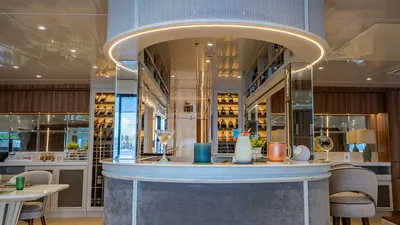


The Monique Galapagos Cruise Tour
Aboard the Monique Galapagos Cruise, you will embark on an unforgettable voyage through one of the world’s most extraordinary natural sanctuaries.
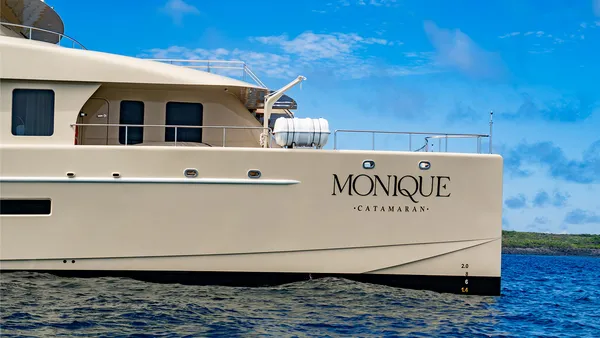
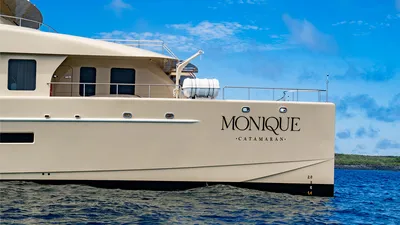
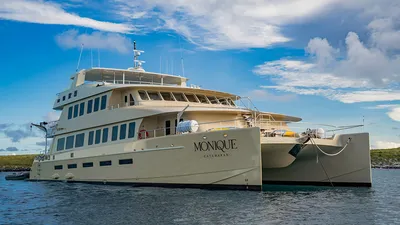
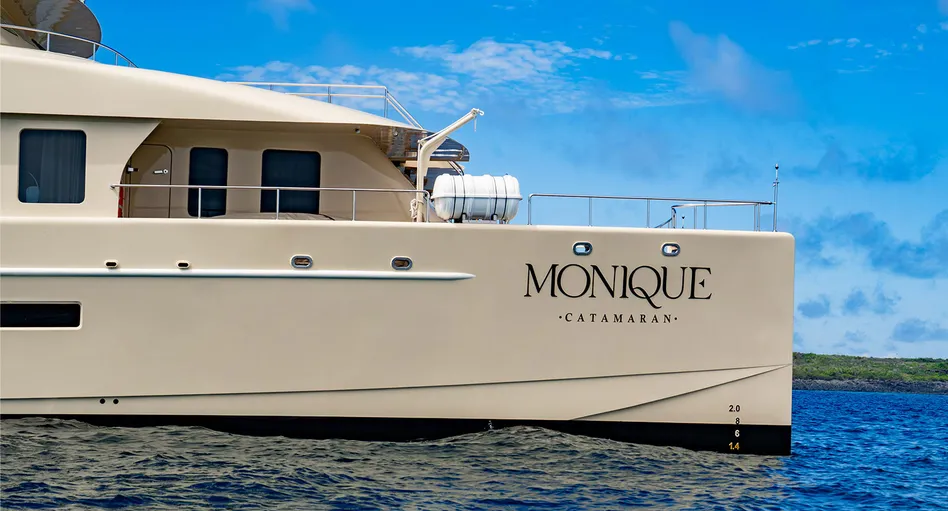
You will be aboard one of the newest luxury catamarans in the Galapagos. The Monique combines modern elegance with sustainability, offering a refined experience for just 16 guests. Discover the diverse ecosystems of Santa Cruz, Isabela, Santiago, Rábida, and Fernandina, each revealing its own story of evolution and wonder. Guided by expert naturalists, you’ll explore the archipelago’s most iconic sites.
Explore incredible habitats from the white sands of Las Bachas Beach to the volcanic cliffs of Tagus Cove and the wildlife-rich waters of Vicente Roca Point.
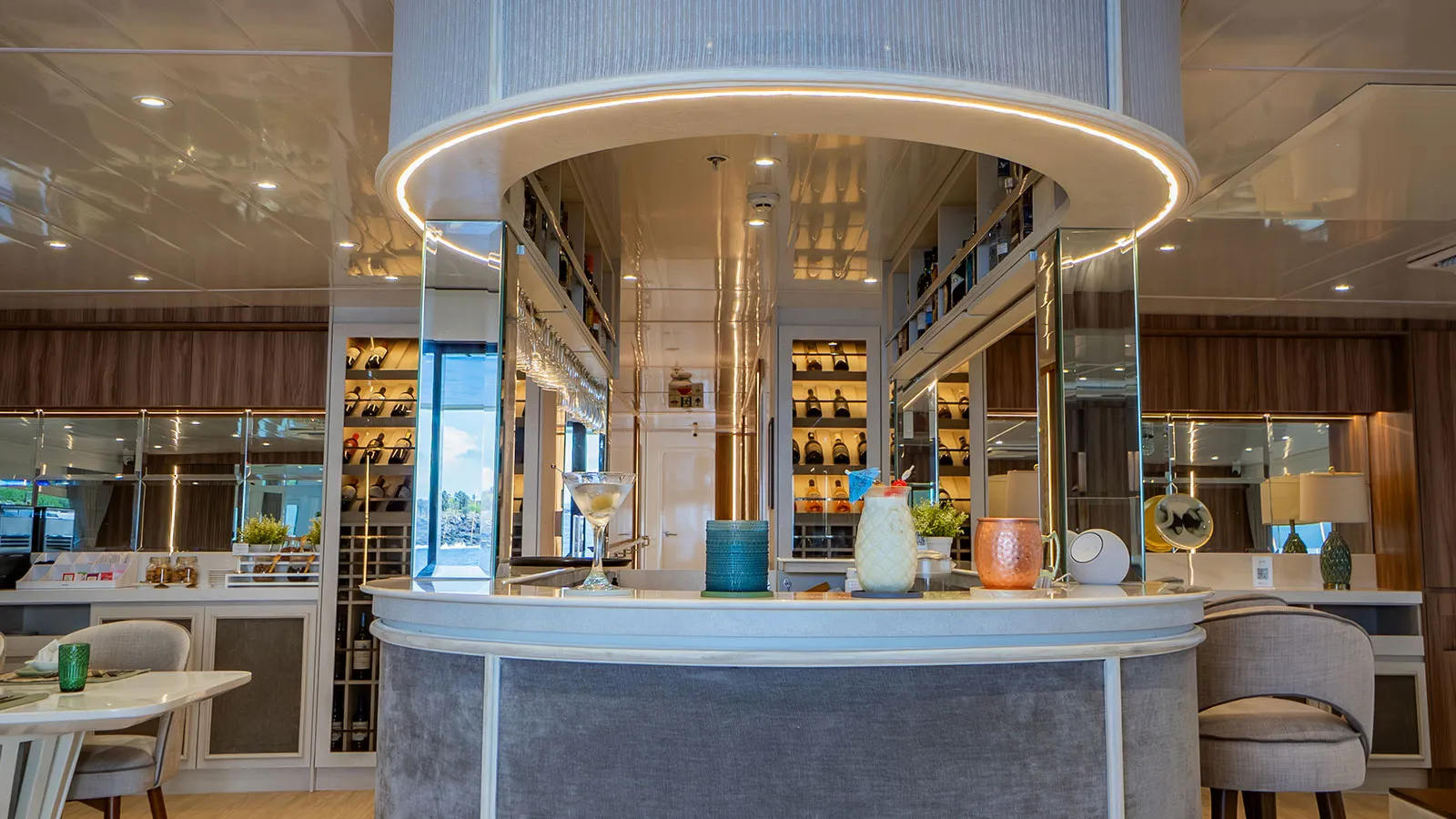
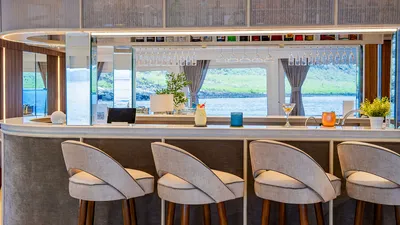
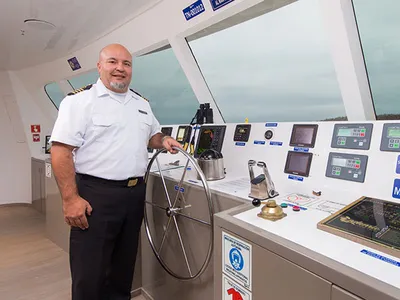
Between excursions, you will relax in the Monique’s panoramic social spaces designed to immerse you in the surrounding scenery. With three spacious decks and a near 1:1 crew-to-guest ratio, personalized service and comfort are at the heart of every moment.
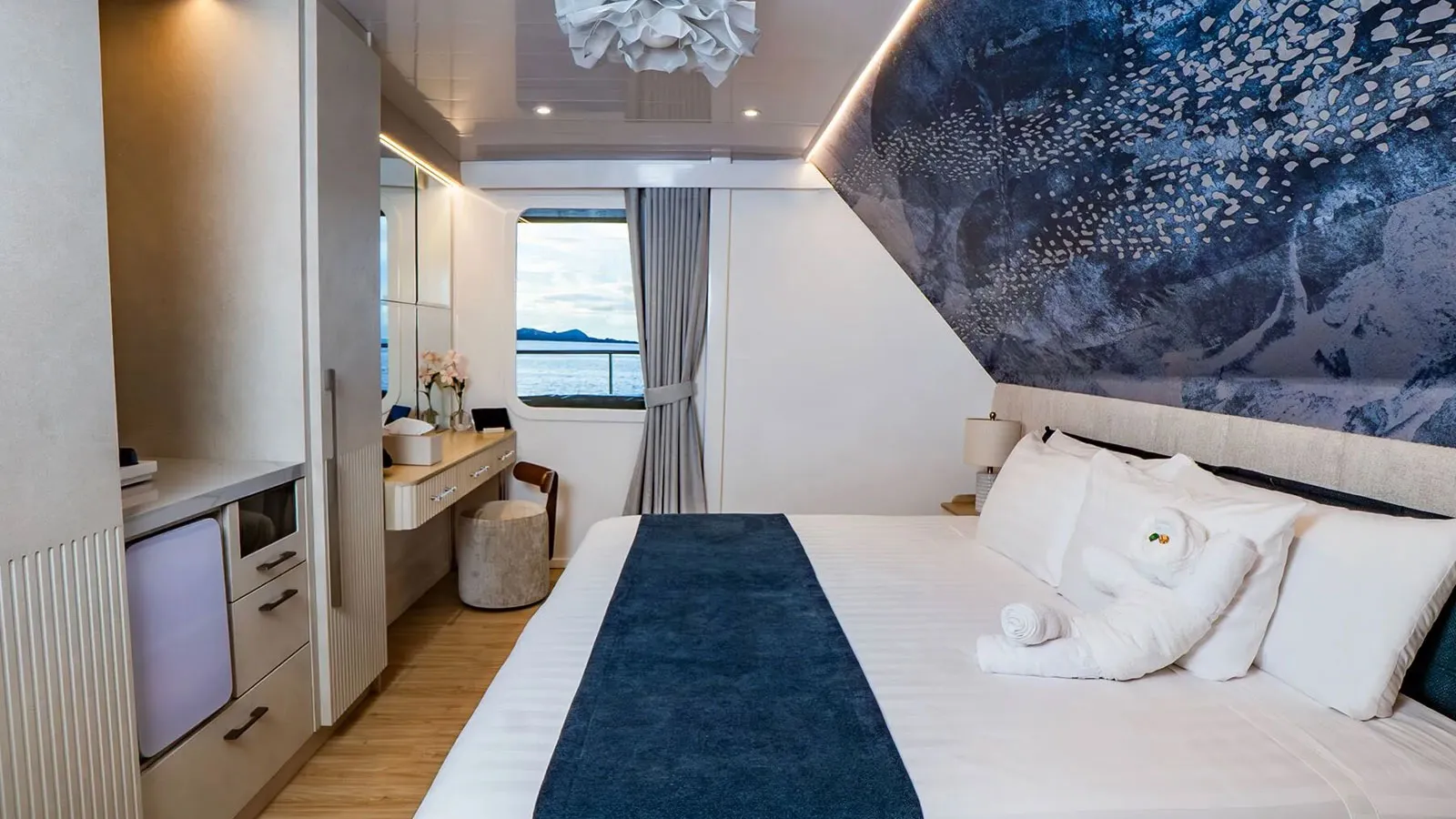
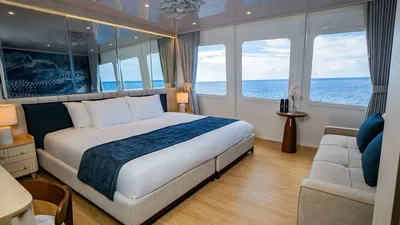
Each suite reflects the ship’s modern design philosophy. They are bright, airy, and elegantly appointed for ultimate relaxation. Enjoy soothing ocean views, deluxe bedding, and eco-friendly amenities that complement the vessel’s commitment to sustainability.
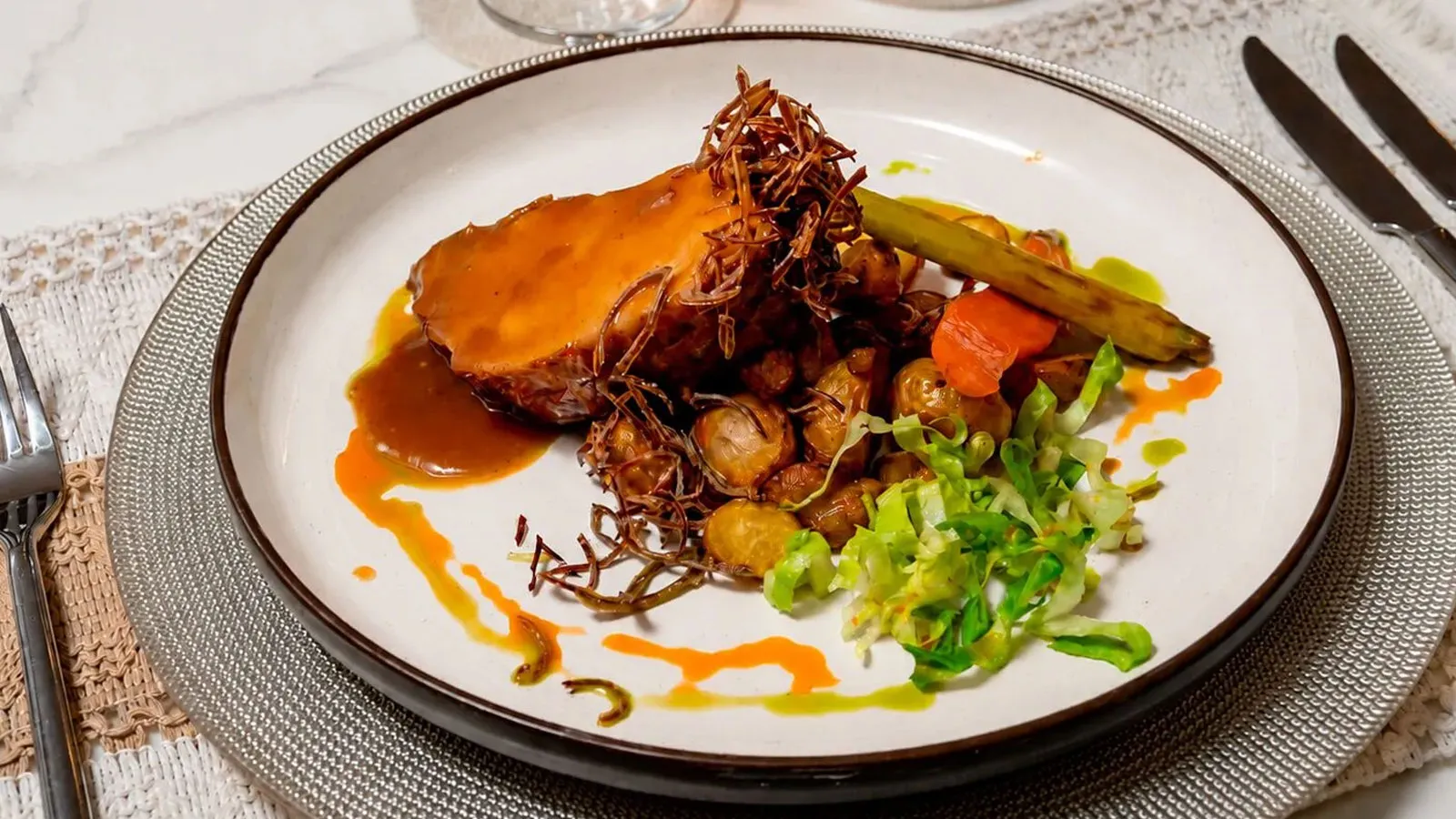
Your dining experience aboard the Monique is a celebration of flavor and artistry. The Epicure Cuisine Experience brings together regional ingredients and international flair, offering an array of diverse, beautifully presented dishes that capture the spirit of the islands. Guests can savor each meal in the indoor dining room or dine al fresco under the open sky, accompanied by refreshing sea breezes.
Throughout your journey, experience guided island walks, kayaking, snorkeling, and Zodiac adventures. Each day will unveil new wildlife encounters and awe-inspiring landscapes. From the birdlife of North Seymour to the dramatic lava fields of Sullivan Bay, every moment you spend aboard the Monique promises discovery, connection, and lasting memories.

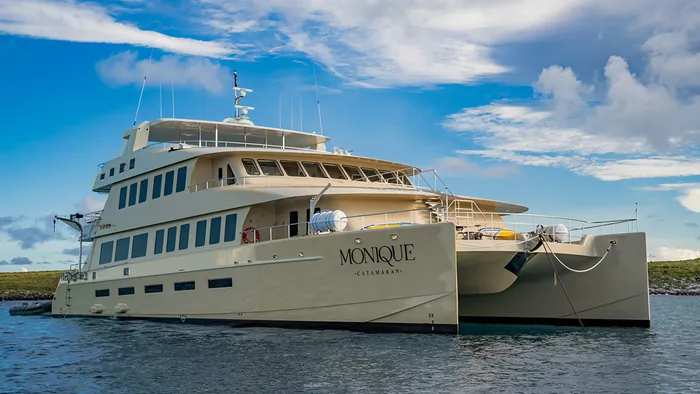
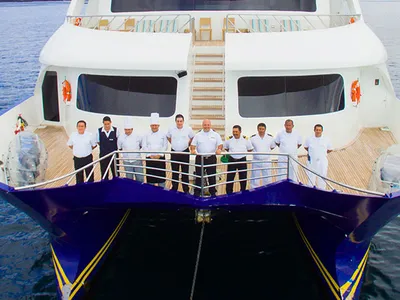
Galapagos is a very special place. Seeing it with the crew of Monique has only made it even better. There have been so many incredible memories made (too many to mention), sea lions, making ceviche, magnificent frigate birds, hiking, snorkeling, & on & on & on. Thanks to each of the crew who looked after us so well. The food was delicious, the rooms always spotless & the drinks plentiful. Eric & Christian were great on the boats.
- Rob
For: The Monique Galapagos CruiseThe Monique Galapagos Cruise Tour Summary
You will enjoy an extraordinary adventure aboard the Monique. Explore five remarkable islands of Santa Cruz, Isabela, Santiago, Rábida, and Fernandina. Each of these will reveal its own blend of wildlife, scenery, and unforgettable moments.
Our Galapagos expedition packages aboard the Monique cater to both short and extended voyages, offering you a memorable and enriching adventure. Regardless of duration, your expert naturalist guides will lead you on captivating daily excursions to iconic sites such as Las Bachas Beach, Tagus Cove, Vicente Roca Point, North Seymour, and Sullivan Bay.
See the next tab for an example itinerary. Choose from 3, 4, and 7-night cruises.
Video Introduction
Tour Info
- Country: Ecuador
- Focus Area: Galapagos National Park
- Duration: 4, 5, & 8+ days
- Start Point: Baltra Island / San Cristobal
- End Point: Baltra Island / San Cristobal
The Monique Galapagos Cruise Itinerary
Choose your itinerary
Click a duration to see the day-by-day programme for this cruise.
Other itineraries may be available — send a request to check options and pricing.
Day 1 · Thursday
Baltra Arrival & Santa Cruz Highlands
You'll be welcomed and assisted at Baltra Airport, then transferred to the M/C Monique. In the afternoon you'll head up to the Santa Cruz highlands, where giant tortoises roam wild in their natural habitat, the same species that gave the islands their name. The area is also good for birdwatching, with finches and other native species moving through the undergrowth.
Day 2 · Friday
Champion Islet, Cormorant Point, Devil's Crown & Post Office Bay
Champion Islet is a small sanctuary near Floreana known for clear water and coral reefs, a panga ride and snorkel here often turns up sea turtles, sea lions and colourful fish, and the islet shelters one of the last populations of the Floreana mockingbird. Cormorant Point has two contrasting beaches, one olive green from its high olivine content and the other bright white from crushed coral, backed by a saltwater lagoon that draws one of the largest flamingo populations in the islands along with stilts, pintails and flycatchers. From there a dinghy ride brings you to Devil's Crown, a volcanic crater almost entirely submerged, with just enough of the rim showing above water to form its namesake shape, and a rich underwater world of coral and marine life below. In the afternoon, Post Office Bay tells the story of a mail tradition started by British whalers in the 1700s that visitors still take part in today, with good snorkelling and kayaking off the beach and a lava tube you can walk through. A short dinghy ride then takes you to the Baroness's Lookout, named for an Australian baroness who vanished mysteriously after visiting in the 1930s, with a short trail leading to sweeping views over the mangroves and coastline.
Day 3 · Saturday
Suarez Point & Gardner Bay
Suárez Point is one of the richest wildlife walks in the islands, a circular trail passing nesting colonies of Nazca and blue-footed boobies and mockingbirds. Española Island is the only place to see the waved albatross launching itself from the cliffs, alongside red and green marine iguanas, and a set of blow holes here can send water 25 metres into the air. In the afternoon, Gardner Bay offers soft white sand and calm water for swimming, snorkelling, kayaking or paddleboarding alongside resting sea lions, while the nearby Gardner and Osborn Islets hold coral reefs full of tropical fish, rays and young sea lions.
Day 4 · Sunday
San Cristobal Interpretation Center & Departure
The San Cristóbal Interpretation Center walks you through the islands' geological origins, ecological richness and human history, along with the conservation work protecting it today. Afterward you'll be transferred to San Cristóbal Airport for your flight back to mainland Ecuador.
Day 1 · Sunday
San Cristobal Arrival, Witch Hill & Kicker Rock
You'll be welcomed and assisted at San Cristóbal Airport, then transferred to the M/C Monique. In the afternoon, Witch Hill is a secluded bay with fine white sand and clear water, ideal for swimming or snorkelling, and its shallow lagoon is a good vantage point for wildlife and views over Kicker Rock. Circumnavigating Kicker Rock itself brings you past a towering, twin-peaked volcanic formation rising straight out of the sea, home to blue-footed boobies and frigatebirds perched along its narrow ledges.
Day 2 · Monday
Santa Fe Island & South Plaza Island
Santa Fe is one of the oldest islands in the Galápagos, known for towering Opuntia cactus forests and its own pale yellow land iguana found nowhere else. Trails cross the arid landscape to the highlands, where the iguanas bask in the sun, and the calm water in the bay is good for a swim or snorkel alongside sea lions, rays and reef fish. In the afternoon, South Plaza Island packs a lot into a small space, its red and green Sesuvium ground cover contrasts with black lava and towering prickly pear cactus, and swallow-tailed gulls and tropicbirds are often seen nesting or riding the thermals above the cliffs.
Day 3 · Tuesday
Sullivan Bay & Bartholomew Island
Sullivan Bay, on the east coast of Santiago Island, is a walk across a white coral sand beach and out onto lava that flowed less than a century ago, one of the clearest windows into the volcanic origins of the islands, with plant life slowly taking hold across the rock. In the afternoon, Bartolomé Island rewards a climb with sweeping views over Sullivan Bay and the famous Pinnacle Rock, and the beach at its base is one of the best snorkelling spots in the islands, sometimes alongside penguins.
Day 4 · Wednesday
Prince Philip's Steps & Darwin Bay
Prince Philip's Steps, on Genovesa Island, is a stone staircase leading up to a wide plateau where masked boobies, frigatebirds, storm petrels and red-footed boobies nest in large colonies. The trail crosses a small patch of Scalesia forest, home to the short-eared owl, before returning you to the boat. In the afternoon, Darwin Bay is the only sandy beach inside Genovesa's caldera, where great frigatebirds display their red throat pouches along the shore and red-footed boobies nest in the trees rather than on the ground.
Day 5 · Thursday
Black Turtle Cove & Departure
Black Turtle Cove, on the north coast of Santa Cruz, shows how mangroves shape a marine ecosystem, with three species stretching almost a mile inland from the shore. Gliding through by dinghy, you might spot spotted eagle rays, white-tipped reef sharks and green sea turtles surfacing to breathe, along with pelicans, herons and egrets feeding along the water's edge. After this last stop you'll be transferred to Baltra Airport for your flight home.
Day 1 · Thursday
Baltra Arrival & Santa Cruz Highlands
You'll be welcomed and assisted at Baltra Airport, then transferred to the M/C Monique. In the afternoon you'll head up to the Santa Cruz highlands, where giant tortoises roam wild in their natural habitat, the same species that gave the islands their name. The area is also good for birdwatching, with finches and other native species moving through the undergrowth.
Day 2 · Friday
Champion Islet, Cormorant Point, Devil's Crown & Post Office Bay
Champion Islet is a small sanctuary near Floreana known for clear water and coral reefs, a panga ride and snorkel here often turns up sea turtles, sea lions and colourful fish, and the islet shelters one of the last populations of the Floreana mockingbird. Cormorant Point has two contrasting beaches, one olive green from its high olivine content and the other bright white from crushed coral, backed by a saltwater lagoon that draws one of the largest flamingo populations in the islands along with stilts, pintails and flycatchers. From there a dinghy ride brings you to Devil's Crown, a volcanic crater almost entirely submerged, with just enough of the rim showing above water to form its namesake shape, and a rich underwater world of coral and marine life below. In the afternoon, Post Office Bay tells the story of a mail tradition started by British whalers in the 1700s that visitors still take part in today, with good snorkelling and kayaking off the beach and a lava tube you can walk through. A short dinghy ride then takes you to the Baroness's Lookout, named for an Australian baroness who vanished mysteriously after visiting in the 1930s, with a short trail leading to sweeping views over the mangroves and coastline.
Day 3 · Saturday
Suarez Point & Gardner Bay
Suárez Point is one of the richest wildlife walks in the islands, a circular trail passing nesting colonies of Nazca and blue-footed boobies and mockingbirds. Española Island is the only place to see the waved albatross launching itself from the cliffs, alongside red and green marine iguanas, and a set of blow holes here can send water 25 metres into the air. In the afternoon, Gardner Bay offers soft white sand and calm water for swimming, snorkelling, kayaking or paddleboarding alongside resting sea lions, while the nearby Gardner and Osborn Islets hold coral reefs full of tropical fish, rays and young sea lions.
Day 4 · Sunday
San Cristobal Interpretation Center, Witch Hill & Kicker Rock
The San Cristóbal Interpretation Center walks you through the islands' geological origins, ecological richness and human history, along with the conservation work protecting it today. In the afternoon, Witch Hill is a secluded bay with fine white sand and clear water, ideal for swimming or snorkelling, and its shallow lagoon is a good vantage point for wildlife and views over Kicker Rock. Circumnavigating Kicker Rock itself brings you past a towering, twin-peaked volcanic formation rising straight out of the sea, home to blue-footed boobies and frigatebirds perched along its narrow ledges.
Day 5 · Monday
Santa Fe Island & South Plaza Island
Santa Fe is one of the oldest islands in the Galápagos, known for towering Opuntia cactus forests and its own pale yellow land iguana found nowhere else. Trails cross the arid landscape to viewpoints where the iguanas bask in the sun, and the calm water in the bay is good for a swim or snorkel alongside sea lions, rays and reef fish. In the afternoon, South Plaza Island packs a lot into a small space, its red and green Sesuvium ground cover contrasts with black lava and towering prickly pear cactus, and swallow-tailed gulls and tropicbirds are often seen nesting or riding the thermals above the cliffs.
Day 6 · Tuesday
Sullivan Bay & Bartholomew Island
Sullivan Bay, on the east coast of Santiago Island, is a walk across a white coral sand beach and out onto lava that flowed less than a century ago, one of the clearest windows into the volcanic origins of the islands, with plant life slowly taking hold across the rock. In the afternoon, Bartolomé Island rewards a climb with sweeping views over Sullivan Bay and the famous Pinnacle Rock, and the beach at its base is one of the best snorkelling spots in the islands, sometimes alongside penguins.
Day 7 · Wednesday
Prince Philip's Steps & Darwin Bay
Prince Philip's Steps, on Genovesa Island, is a stone staircase leading up to a wide plateau where masked boobies, frigatebirds, storm petrels and tropicbirds nest in large colonies. The trail crosses a small patch of Scalesia forest, home to the short-eared owl, before returning you to the boat. In the afternoon, Darwin Bay is the only sandy beach inside Genovesa's caldera, where great frigatebirds display their red throat pouches along the shore and red-footed boobies nest in the trees rather than on the ground.
Day 8 · Thursday
Black Turtle Cove & Departure
Black Turtle Cove, on the north coast of Santa Cruz, shows how mangroves shape a marine ecosystem, with three species stretching almost a mile inland from the shore. Gliding through by dinghy, you might spot spotted eagle rays, white-tipped reef sharks and green sea turtles surfacing to breathe, along with pelicans, herons and egrets feeding along the water's edge. After this last stop you'll be transferred to Baltra Airport for your flight home.
Day 1 · Thursday
Baltra Arrival, Las Bachas Beach & Daphne Major Islet
You'll be welcomed and assisted at Baltra Airport, then transferred to the M/C Monique. In the afternoon, Las Bachas is a white sand beach on the north coast of Santa Cruz, good for a relaxed walk or gentle snorkel, and a nesting site for sea turtles, with a rusted World War II pontoon still visible on the shore, the source of the beach's name. The vessel then circles Daphne Major, a treeless volcanic cone formed from compacted ash and an important nesting site for Nazca boobies, red-billed tropicbirds and blue-footed boobies, and a landscape that's shaped some of the most influential studies on natural selection.
Day 2 · Friday
Rabida Island & Chinese Hat
Rábida Island is known for its striking red sand beach, framed by cactus groves and dramatic rock formations, with native dry zone plants and endemic species along the way. A walk on the beach sometimes turns up nesting brown pelicans and flamingos in the nearby lagoon. In the afternoon, Chinese Hat is a small islet off the south coast of Santiago, rising just 52 metres at its highest point and rarely visited outside a Galápagos cruise.
Day 3 · Saturday
Vicente Roca Point & Espinoza Point
Vicente Roca Point, only reachable by dinghy, is a wide bay on Isabela's northwest coast with two coves that draw nesting blue-footed and Nazca boobies, storm petrels and brown noddies. The nutrient-rich water makes it one of the best snorkelling spots in the islands, with whales, dolphins, sea lions and seabirds often feeding nearby. In the afternoon, Fernandina Island, one of the most pristine in the archipelago and the most volcanically active, has never had an introduced species take hold. Espinoza Point is its only visitor site, home to marine iguanas and Galápagos hawks, with walking and snorkelling in one of the most untouched places on earth.
Day 4 · Sunday
Moreno Point & Elizabeth Bay
Moreno Point, on the west coast of Isabela, looks like a barren lava flow at first, but the trails soon reveal green lagoons and mangroves, a good spot for penguins, herons and flamingos. A dinghy ride or snorkel along the rocky shoreline often turns up green sea turtles and white-tipped reef sharks. In the afternoon, Elizabeth Bay is explored entirely by dinghy, since no landing is permitted here to protect the site, and the clear water reveals an abundance of marine life along the way.
Day 5 · Monday
Urbina Bay & Tagus Cove
Urbina Bay once sat on the ocean floor before volcanic uplift pushed it above water, and it's now home to sea lions, land iguanas and flightless cormorants, a good spot for free time on the beach or a guided walk. In the afternoon, Tagus Cove holds traces of the pirates and sailors who once used it as a stopover in the 1800s. The trail here offers views over the cove and, on the other side, the mangrove forest that shelters the last remaining pairs of the mangrove finch.
Day 6 · Tuesday
Espumilla Beach & Buccaneer Cove
Espumilla Beach, on the north coast of Santiago, is a white sand beach named for the foam left behind by the waves, and a popular spot for marine iguanas and Sally lightfoot crabs, which in turn draw hawks, herons and pelicans. Snorkelling here often turns up octopus, moray eels and reef sharks. In the afternoon, Buccaneer Cove was once a safe harbour for sailors, buccaneers and whalers stashing loot, taking on water and loading tortoises for food. Today its red cliffs and eroded rock formations shelter nesting boobies, pelicans and gulls, with sea lions and fur seals resting along the shore and sea turtles nesting nearby. A dinghy ride brings you close to the coastline and birdlife, while snorkelling, kayaking or paddleboarding reveal the marine life below.
Day 7 · Wednesday
North Seymour Island & Mosquera Islet
North Seymour Island, named for British naval officer Lord Hugh Seymour, is covered in low vegetation and full of birdlife, blue-footed boobies, swallow-tailed gulls and a large colony of magnificent frigatebirds, the males displaying their red throat pouches to attract mates. In the afternoon, Mosquera sits between Baltra and North Seymour, a flat sandy islet with no set trail, free to explore on foot. It's known for a thriving sea lion colony, shorebirds and colourful Sally lightfoot crabs, and the surrounding reefs are good for spotting rays, turtles and reef sharks while snorkelling.
Day 8 · Thursday
Charles Darwin Research Station & Departure
At the Fausto Llerena Breeding Center, also known as the Charles Darwin Research Station, you'll find an interpretation center, museum, library and tortoise breeding facility, where several subspecies are raised and prepared for reintroduction to the wild. After this last stop you'll be transferred to Baltra Airport for your flight home.
The Monique Galapagos Cruise Activities
Snorkelling
Wildlife walks
Kayaking and paddleboarding
Panga rides
Birdwatching
Lava tube walks
Blow hole viewing
Beach relaxation
Conservation center visits
Cultural and historical stops
Rates & Inclusions
4 days / 3 nights
Golden Stateroom (Double Occupancy): $4,190
Charter rate: $62,490
from $3,906pp at max capacity (16 guests)
5 days / 4 nights
Golden Stateroom (Double Occupancy): $5,190
Charter rate: $77,490
from $4,843pp at max capacity (16 guests)
8 days / 7 nights
Golden Stateroom (Double Occupancy): $8,290
Charter rate: $123,790
from $7,737pp at max capacity (16 guests)
11 days / 10 nights
Golden Stateroom (Double Occupancy): $11,490
Charter rate: $171,490
from $10,718pp at max capacity (16 guests)
12 days / 11 nights
Golden Stateroom (Double Occupancy): $12,490
Charter rate: $186,490
from $11,656pp at max capacity (16 guests)
15 days / 14 nights
Golden Stateroom (Double Occupancy): $15,590
Charter rate: $232,790
from $14,549pp at max capacity (16 guests)
Notes
- Rates are subject to change in case of additional taxes, fuel price increases or any other unforeseen circumstances.
- Programs per person based on double occupancy
- Suites have king size beds or two twin size beds.
- New surcharges will be published in a timely manner.
- High occupancy dates: A 10% surcharge applies
- High occupancy dates: 100% Single Supplement applies
- Single Suite: Single supplement for suites is 50%
- Single Suite: 100% supplement applies for a second single stateroom, based on the cruise departure occupancy.
- Single Suite: Not applicable during high occupancy dates and subject to availability.
- Children policy: 25% discount per child (#1) applies out of the gross rates when traveling with two adults.
- Children policy: Children must be under 12 years old when they board the cruise.
- Children policy: Not applicable on Christmas and New Years' Eve departures.
- Supplied Expedition Gear Sea kayaks, Ocean paddle boards, Wetsuits and fins, Water containers, Masks and snorkels, Expedition Binoculars, Action Cameras, Micro SD Card 4K (Surcharge)
Included
- Transfers in the Galapagos: airport/catamaran/airport
- Airport reception and assistance
- Guided expeditions based on itineraries
- Top bilingual National Park guide (English / Spanish)
- Cruise Service Officer
- Daily briefing of activities
- All meals and snacks
- Soft drinks and juices
- Captain’s welcome and farewell cocktails
- Supplied expedition gear
- Use of yoga mats
Not Included
- Round trip to Galapagos
- Galapagos National Park Entrance fee ($100 – subject to change)
- Transit Control Card ($20 – subject to change)
- Alcoholic and bottled beverages
- Gratuities for guide and crew
- Travel and health insurance

Operated By Golden Experiences
About Golden Experiences
Golden Experiences & Travel own and operate unique premium experiences in Ecuador, including La Selva Lodge & Spa and the luxury-class Ocean Spray, Endemic, Elite and Petrel cruises for the Galapagos Islands. These modern and luxurious catamarans are spacious, comfortable, steady, and eminently seaworthy, setting a new standard for luxury yachts in the Galapagos
Golden Experiences promotes a sustainable relationship with the natural and social environment. They offer high-quality service, trained motivated staff, responsible management practices, and maintain positive relationships with the communities they work with.

Golden Experiences Details
Explore More Tours

The Ocean Spray Cruise
Baltra Island, Ecuador
- Galapagos Islands
- Galapagos National Park
- Luxury Cruise, Guided Galapagos Tours
Aboard the Ocean Spray Cruise, you will embark on a memorable journey through the mesmerizing Galapagos Islands. The 16-passenger luxury …

The Petrel Luxury Cruise
Baltra Island, Ecuador
- Galapagos Islands
- Galapagos National Park
- Luxury Cruise, Guided Galapagos Tours
The luxurious Petrel Galapagos Cruise offers you an extraordinary journey of the Galapagos Islands. Over 3, 4, 5 or 7-night …